Soul Link Nuzlocke Rules: How to Keep Every Pair Fair
Soul Link Nuzlocke rules turn two solo challenges into one shared story. This guide explains encounter pairing, linked deaths, reroll clauses, type limits, randomizer settings, and a shared route log that keeps both players accountable.
Quick Answer
Soul Link Nuzlocke rules pair the first valid encounter from the same named area for two players. Those Pokemon stay linked: if one is lost, the partner leaves the active run too. Write pairing, reroll, type-limit, and wipe rules before Route 1.
The cleanest rule sheet starts with normal Nuzlocke rules, then adds encounter pairing, death links, duplicate handling, pair typing limits, and a shared route log. Decide wipe rules, invalid encounter rerolls, disconnects, and randomizer settings before either player reaches the first route.
Pokemon Roulette fits best as a co-op prompt tool. Use one spin for a shared route goal, type restriction, reroll token, or stream modifier. Do not use the wheel to reverse a death link after the rule has already triggered.
Core Soul Link Nuzlocke Rules
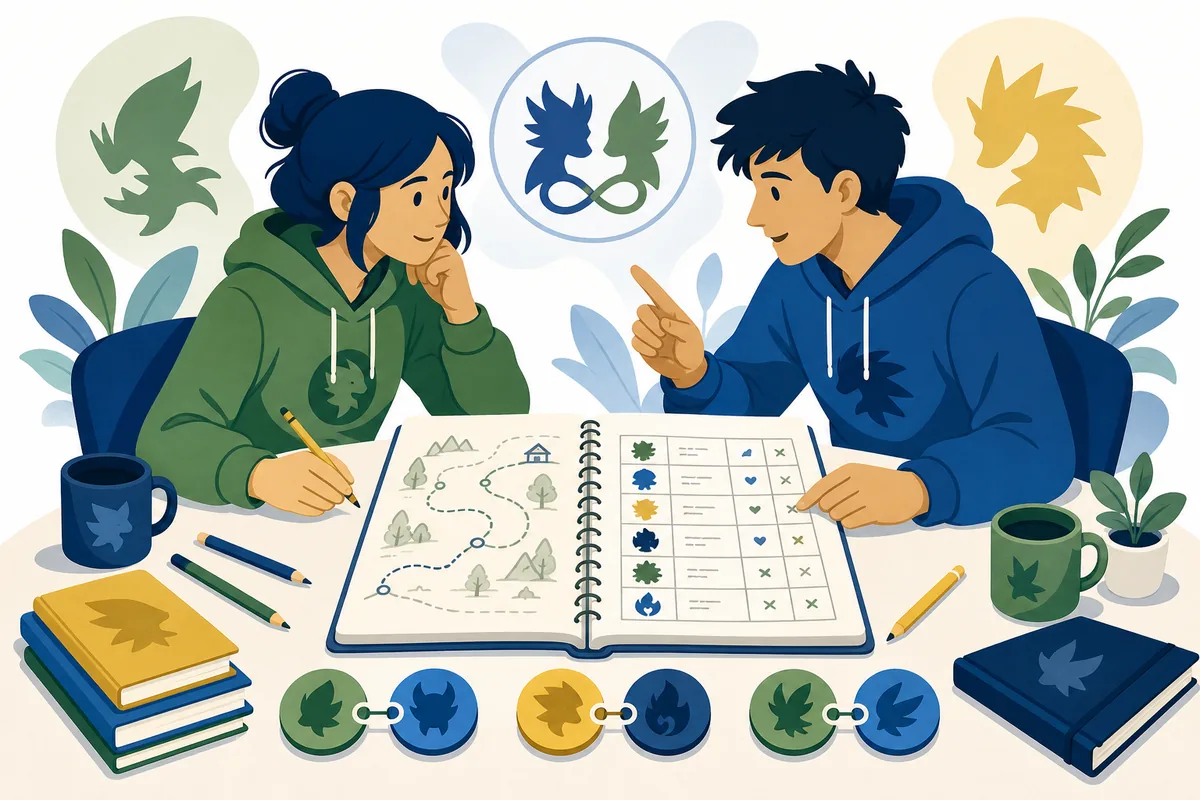
Use these rules as the baseline. They are easy to explain to a partner, a stream audience, or a friend who joins after the first badge.
- First encounter per area: Both players catch only the first valid encounter in each matching named area. If one player reaches a route first, they wait to confirm the pair before moving on.
- Linked pairs: The two encounters from the same area become one pair. They stay paired even if one evolves, changes form, or is temporarily boxed.
- Death link: If either Pokemon in a pair faints, both Pokemon in that pair are removed from the active run. Most teams keep a shared death box for clarity.
- Nickname and route log: Nickname every catch and record the area, player A encounter, player B encounter, status, and any reroll reason.
- Team legality: Many Soul Link runs allow only one active pair of the same primary type across both teams. If you use this restriction, define it before the first catch.
- Shared wipe rule: Decide whether one player's wipe ends the whole run, forces both players to rebuild from legal boxed pairs, or creates one limited recovery clause.
Rule Decisions to Make Before Route 1
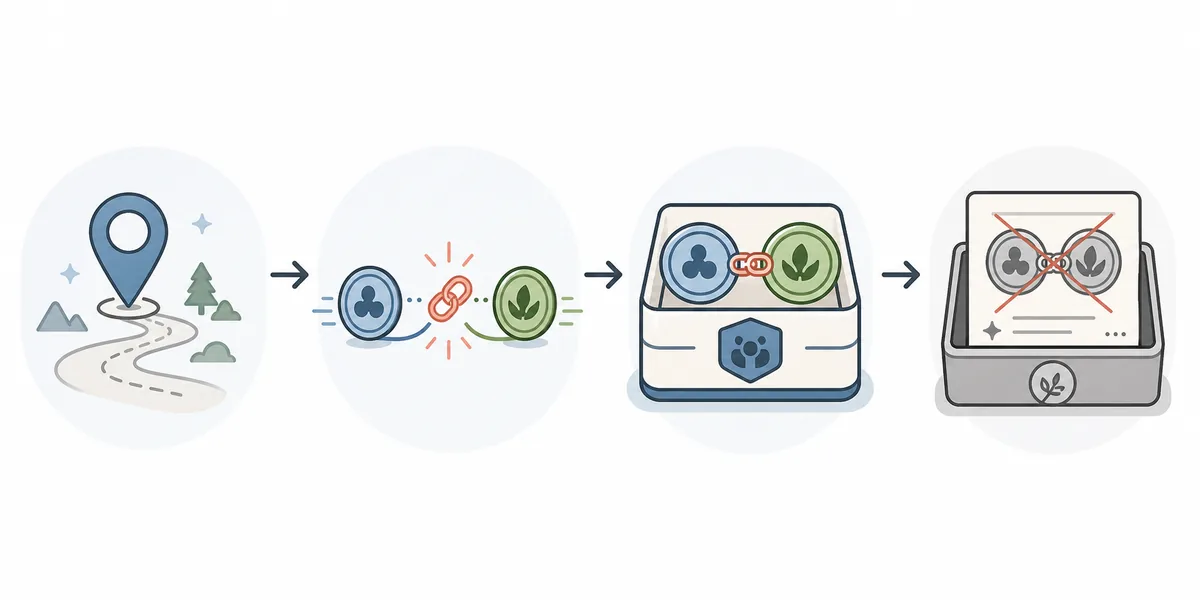
Most Soul Link arguments come from rules that were assumed but never written down. Use this table before the first encounter.
| Decision | Recommended default | Stricter option | Why it matters |
|---|---|---|---|
| Duplicate clause | Reroll species already owned by either player | No duplicate rerolls after one attempt | Prevents one side from getting trapped by repeated weak pairs |
| Type limits | No duplicate primary types on the active team | No duplicate primary or secondary types | Adds strategy but can force more boxing |
| Gift Pokemon | Pair gifts only with gifts from the same story moment | Ban gifts entirely | Keeps special encounters from becoming free extras |
| Static encounters | Treat each static area as its own pair | Use only one static pair per badge split | Stops scripted encounters from bloating the team |
| Randomizer settings | Same seed style and similar-strength settings | Fully random with invalid-seed reset only | Keeps co-op losses understandable |
| Wipe condition | Both players rebuild from legal boxed pairs once | Any wipe ends the run | Determines whether the run is story-focused or hardcore |
How to Keep a Soul Link Pairing Log
A shared Soul Link pairing log should record the area, player A encounter, player B encounter, pair status, and any legal reroll reason. This prevents a forgotten route or disconnected session from changing the rules mid-run.
Use one row per named area. Record the area name exactly as the game displays it, both encounters, whether the pair is active, boxed, dead, or invalid, and the reason for any reroll. If the game has subareas, decide whether they count as separate areas before anyone catches there.
For streams, show the pair log periodically instead of explaining the whole rule sheet after every loss. Viewers understand linked consequences faster when the route and pair status are visible.
- Minimum columns: area, player A catch, player B catch, pair status, reroll reason.
- Use the same area names both players can verify in-game.
- Mark invalid encounters immediately so they do not become later arguments.
Using Randomizers Without Breaking the Link
A Soul Link randomizer is fun because both players react to surprise pairs, but the settings must stay readable. Matching randomizer boundaries matter more than maximum chaos. Random starters and wild encounters usually work well; fully random moves, abilities, items, and trainers can make linked deaths feel arbitrary.
If you randomize, both players should record the tool version, seed or settings summary, and the exact options that affect encounters and trainers. If an early route produces an impossible pair or a progression issue, allow only a narrow invalid-seed reset before the run truly begins.
Keep technical randomizer settings separate from challenge rules. The randomizer changes what appears in the game; the Soul Link rule sheet decides what counts as legal play.
- Best first setup: randomized starters, randomized wild encounters, similar-strength trainers.
- Use caution with random abilities, random moves, random marts, and random key items.
- Write down the seed and settings before sharing the run.
Where Pokemon Roulette Fits
Pokemon Roulette should sit above the run as a prompt layer. Spin once before a badge split for a shared side objective, a type ban, a bonus reroll token, or a theme for the next valid pair. That keeps the wheel useful without pretending it changes game files.
Good Soul Link prompts affect both players equally. For example, a spin can decide that the next active pair must share a role, that both players avoid one type until the next boss, or that the next route has one bonus scouting rule. Avoid prompts that save only one player after a mistake.
If you already use the Pokemon Challenge Randomizer, keep the prompt short enough to track in the same route log. One clean rule is stronger than a stack of vague modifiers.
- Use one shared prompt per badge split or session.
- Record the prompt in the same log as encounter pairs.
- Do not spin after a death link to undo the consequence.
Common Mistakes That Break Co-op Fairness
The first mistake is asymmetric mercy. If one player gets extra rerolls because their game looks harder, the link stops feeling shared. Build mercy clauses that affect both players or neither player.
The second mistake is changing pair legality after a lucky catch. Type restrictions, duplicate clauses, and gift rules must be clear before the result appears. If the rule would feel unfair after a bad result, it should not be invented after a good one.
The third mistake is hiding the log. Soul Link runs are easier to enjoy when both players can audit the same information. If one person tracks everything privately, even honest mistakes can look suspicious.
- Use shared reroll rules, not one-player exceptions.
- Do not change type or duplicate rules after seeing the catch.
- Keep the pair log visible to both players.
Useful References
Use official and project-level references for species context and randomizer feature boundaries. Avoid unsafe ROM download pages when planning a public run.
- Official Pokemon Pokedex - for official species names, typing, and Pokemon context
- Universal Pokemon Randomizer ZX - for understanding common randomizer settings and limits
Soul Link Nuzlocke FAQ
What are Soul Link Nuzlocke rules?
They pair two players' first valid encounters by area. If one linked Pokemon is lost, its partner is also lost, so both players share every route's consequences.
Do both players need the same game?
It is easier when both players use the same game or compatible versions, but the key requirement is that areas can be matched clearly in the route log.
What happens if one player misses the first encounter?
Most rule sheets treat the pair as missed unless the miss was caused by a prewritten invalid-encounter clause. Decide this before Route 1.
Can linked Pokemon be boxed separately?
Yes, but track the pair status. If one member of the pair is dead, the partner cannot stay active just because it was boxed at the time.
Should Soul Link runs use type restrictions?
Type restrictions are common but optional. They add planning depth, but they can also force frequent boxing, so beginners may want to use only primary-type limits.
Can Pokemon Roulette choose Soul Link rules?
It can choose shared prompts, type bans, bonus goals, or reroll tokens. It should not override death links, legal encounters, or the route log.
Start With the Pair Log, Then Spin
Write the Soul Link rule sheet first, agree on the pairing log, and use Pokemon Roulette for one shared prompt that both players can follow.
Spin Pokemon Roulette Open Challenge Randomizer