Pokemon Gym Challenge Rules: Build a Fair GLC Deck
Pokemon Gym Challenge, often searched as Gym Leader Challenge or Pokemon GLC, is a fan format for the Pokemon TCG built around one type, singleton deck building, and lower-power card choices. This guide explains the rules in plain language, where Pokemon Roulette can help choose a type, and how to avoid mixing it up with a video-game monotype run.
Quick Answer
Pokemon Gym Challenge rules usually mean Gym Leader Challenge for the Pokemon TCG: choose one Pokemon type, build a 60-card deck, use only one copy of each card except Basic Energy, and avoid Rule Box Pokemon such as Pokemon ex, V, VMAX, GX, Prism Star, BREAK, and Radiant cards.
The format is different from a video-game gym run. In GLC, your deck should feel like one Gym Leader's type identity, while Trainers and Energy provide consistency. The main work is deciding the type, checking legal attackers, and keeping every non-Basic-Energy card singleton.
Pokemon Roulette is useful before deck building: spin a type, record the result, then build within that identity. Treat rerolls as a pre-game option, not a way to dodge every weak matchup after testing.
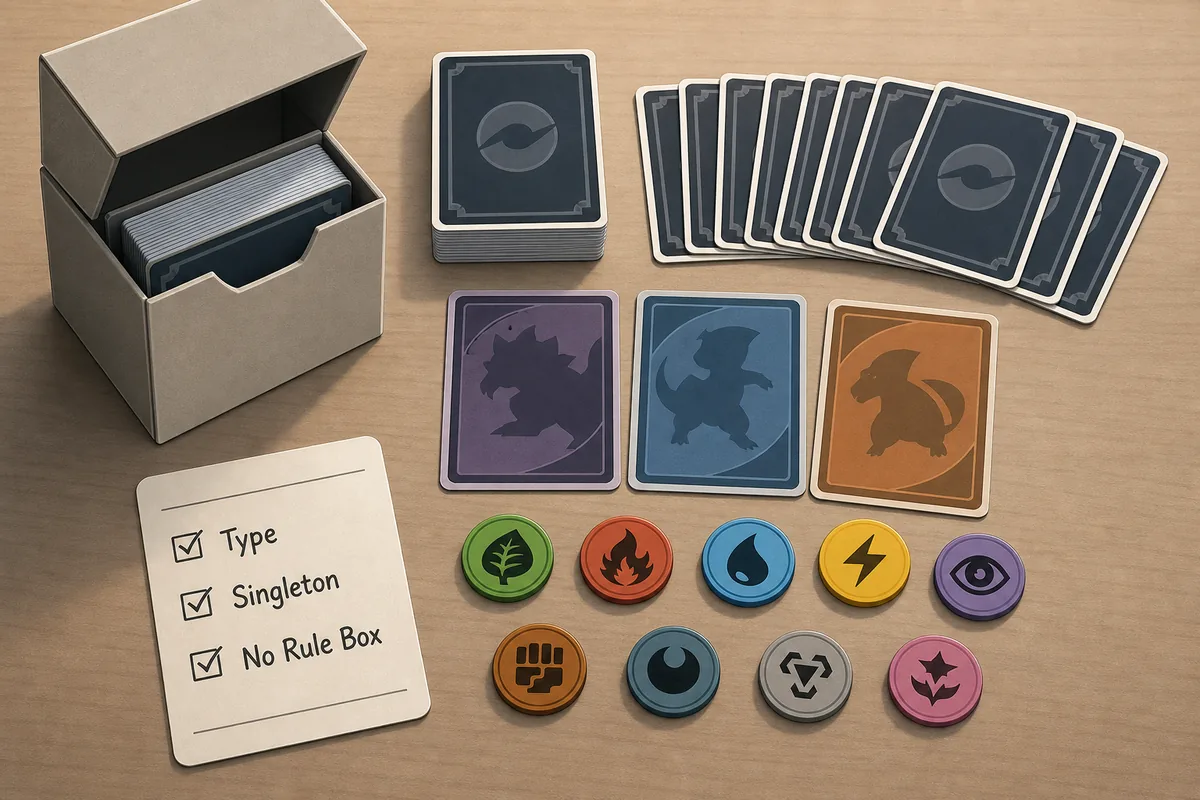
Core Pokemon Gym Challenge Rules
Use this checklist as a practical starting point. Always check the current official/community rules page before entering an event, because local groups may update ban lists or card legality.
- Choose one Pokemon type: Every Pokemon in the deck must share that type identity. If you choose Water, your Pokemon lineup should be Water-focused rather than a mixed toolbox.
- Build a 60-card deck: Use the normal Pokemon TCG deck size. The rule twist is not deck size; it is type identity, singleton construction, and lower-power card choices.
- Use singleton limits: You may play only one copy of each card name, except Basic Energy. This makes search, recovery, and flexible attackers more important.
- Avoid Rule Box Pokemon: Pokemon ex, V, VMAX, GX, BREAK, Prism Star, Radiant, and similar Rule Box cards are usually excluded so the format stays slower and more deck-building focused.
- Check set legality and local ban lists: Gym Leader Challenge is commonly played with Expanded-style card pools plus format-specific exclusions, but local events may publish their own legal list.
- Write reroll rules before building: If a roulette spin picks a type with too few cards for your collection, decide whether one reroll is allowed before any deck testing begins.
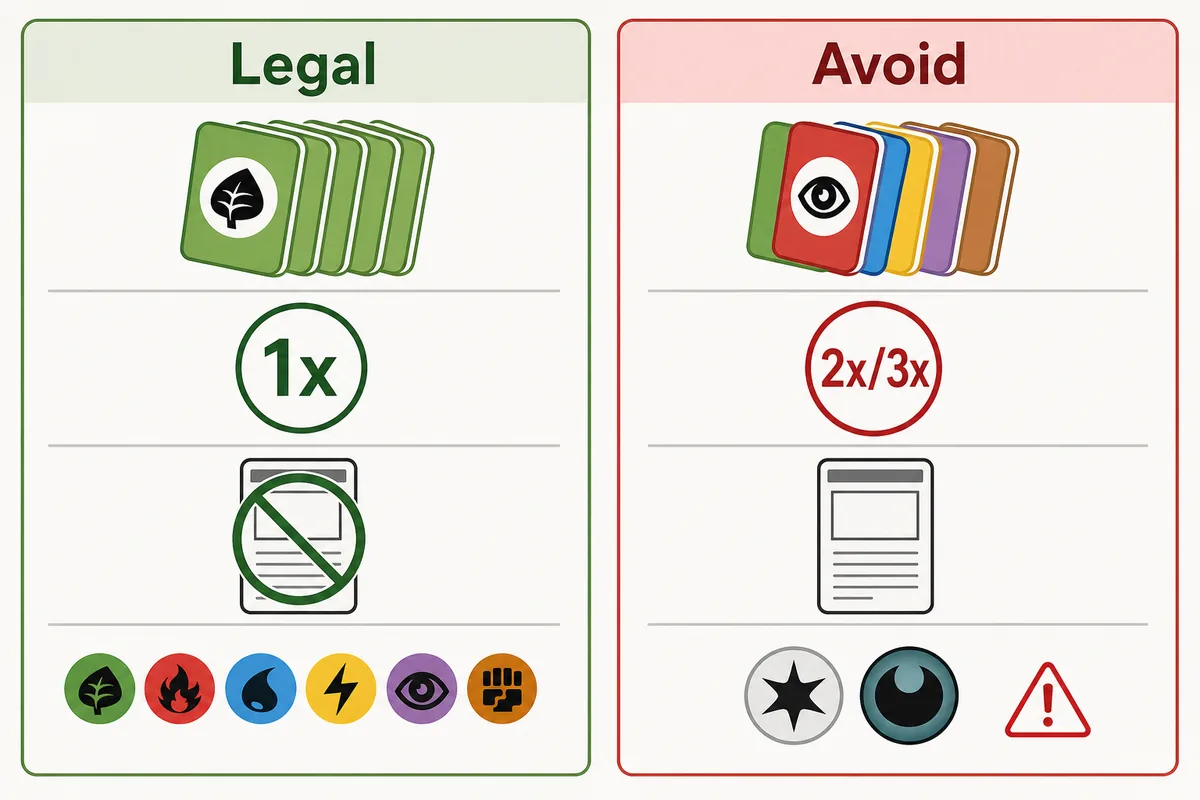
GLC vs Video-Game Monotype Challenge
Search results often mix Gym Leader Challenge with monotype video-game runs. Keep these boundaries clear so the page answers the right intent.
| Decision | Pokemon Gym Challenge / GLC | Video-game monotype run | Why it matters |
|---|---|---|---|
| Main format | Pokemon TCG deck format | Story playthrough or challenge run | The rules apply to cards, deck lists, and match play, not route encounters. |
| Type rule | Pokemon in the deck share one type | Team members share one type | Similar theme, different legality checks. |
| Duplicate rule | One copy of each card except Basic Energy | Usually one species clause only if added | Singleton is central to GLC. |
| Power limits | No Rule Box Pokemon and format bans | Optional bans on legends or overleveling | Prevents importing video-game assumptions into deck legality. |
| Best roulette use | Choose type or deck-building constraint | Choose team prompt or run theme | The wheel should lock the theme before building. |
How to Choose a Type
The best GLC type is the one you can actually build with your collection. A type with many single-prize attackers, search-friendly evolution lines, and recovery options will usually feel better than a type with only one flashy attacker.
Water, Psychic, Fighting, Fire, Grass, Lightning, Darkness, Metal, Dragon, and Colorless can all work, but the experience changes by card pool. If your local group uses a strict ban list, check that list before you commit to a type.
For a friendly challenge night, let Pokemon Roulette choose the type and allow one pre-deck reroll only if the type is impossible with your card pool.
- Pick the type before reviewing matchups.
- Check whether you own enough legal attackers and support Pokemon.
- Use the type wheel for theme selection, not for repeated post-loss rerolls.
Deck-Building Checklist
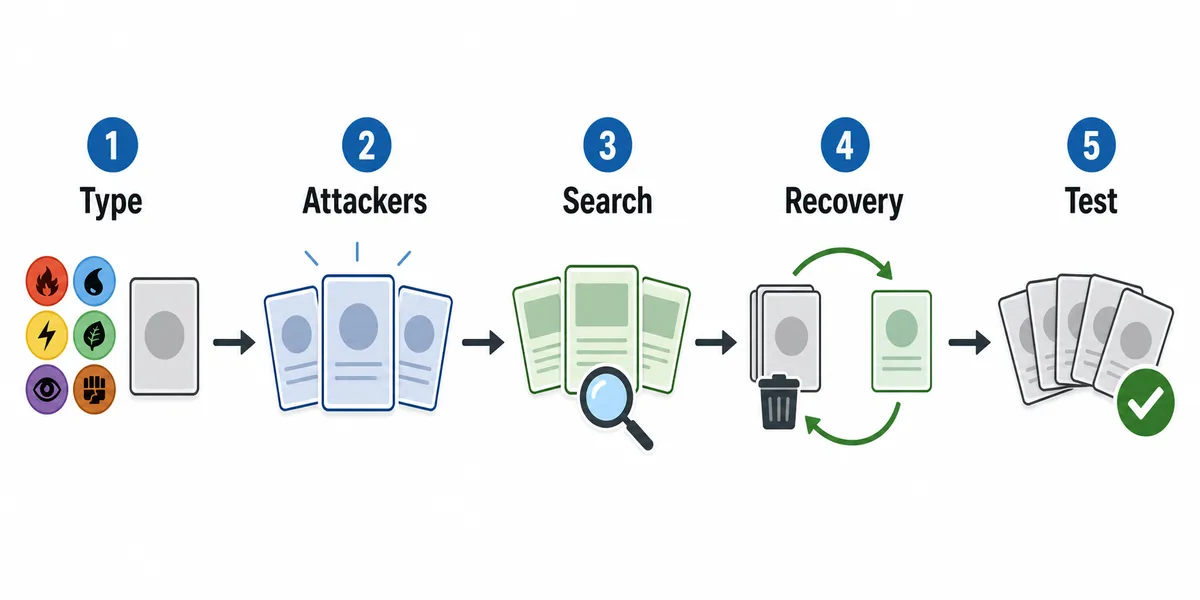
Start with attackers, then add search, draw, switching, recovery, stadiums, and energy. Because the deck is singleton, you need several ways to find cards rather than four copies of the same consistency engine.
Keep the one-copy rule visible while building. It is easy to accidentally add two copies of a useful Trainer, duplicate an evolution piece, or include a card with the same name from a different set.
A practical deck review is simple: sort by card name, confirm every non-Basic-Energy card appears once, then review every Pokemon for the chosen type identity.
- Sort the deck by card name before sleeving.
- Separate Basic Energy from singleton checks.
- Review Pokemon type identity before testing.
Using Pokemon Roulette for GLC Prompts
Pokemon Roulette fits GLC because both start with a theme constraint. Spin a random type, write it into the deck sheet, then build the strongest legal version you can without changing the theme after bad draws.
For group play, everyone can spin a type and then trade rerolls. For example, each player gets one reroll before deck construction, but no rerolls after seeing another player's deck.
If you want stricter competition, skip rerolls and let players choose from their own legal card pools after the type is locked.
- Casual mode: one type spin plus one pre-build reroll.
- Group mode: spin publicly and record the final type.
- Strict mode: no rerolls after the first legal type result.
Common Rules Mistakes
The most common mistake is bringing video-game monotype assumptions into GLC. A Pokemon that feels thematic in a game run still needs to follow the card-format legality rules.
Another mistake is forgetting the singleton restriction. Different artwork or set numbers do not make two cards with the same name legal together unless the current rules say otherwise.
Finally, do not use Pokemon Roulette to patch every weakness. A random type prompt is fun because it creates a constraint; unlimited rerolls remove the challenge.
- Do not include Rule Box shortcuts unless the event explicitly allows them.
- Do not treat different prints as different card names.
- Do not change type after testing bad matchups.
External References
Use these references to verify the current format framing and card-rule context before an event. This page is a practical fan guide, not an official tournament policy document.
- Gym Leader Challenge Rules - for current GLC format framing and rules
- Pokemon TCG Rulebook - for the official baseline Pokemon TCG rules
- Pokemon TCG Card Database - for checking card names, types, and prints
Pokemon Gym Challenge Rules FAQ
Is Pokemon Gym Challenge the same as Gym Leader Challenge?
In most search contexts, yes. Players often use Pokemon Gym Challenge to mean the fan Gym Leader Challenge format for the Pokemon TCG.
Can I use more than one copy of a card in GLC?
Usually no. The format is singleton, so every card name is limited to one copy except Basic Energy.
Are Pokemon ex or V cards legal in Gym Leader Challenge?
They are usually not legal because Rule Box Pokemon are excluded. Always check the current community or event rules before playing.
Can Pokemon Roulette pick my GLC type?
Yes. Use the Pokemon Type Wheel before building, record the type, and decide any reroll limit before deck testing starts.
Is this a video-game monotype challenge?
No. It shares the one-type theme, but Pokemon Gym Challenge / GLC is a TCG deck-building format. For video-game runs, use a monotype or Nuzlocke rules guide instead.
Turn the Type Into a Deck Constraint
Spin a type, write down the singleton and no Rule Box limits, then use the challenge tools to keep the prompt fair for casual group play.
Spin the Type Wheel Read Monotype Challenge Rules