Pokemon Monotype Challenge Rules: Build a Fair Single-Type Run
A Pokemon monotype challenge is simple to explain but easy to make unfair if you decide exceptions mid-run. This guide gives you a practical ruleset for single-type runs, dual-type Pokemon, late-game type availability, Monolocke variants, and Pokemon Roulette prompts before the run starts.
Quick Answer
Choose one Pokemon type before the run begins. A Pokemon is legal if it has that type now, gains it by a planned evolution you can reach, or fits a written grace clause for the early game. Dual-type Pokemon are usually allowed because they still share the chosen type.
The fair version is not just 'use one type.' You also need rules for starters, trade evolutions, gift Pokemon, regional forms, Terastal or form changes, duplicate species, and what happens when the chosen type does not appear until later in the game.
Pokemon Roulette works best as a prompt layer: spin the type wheel, record the result, then write the exception list before the first badge. It should not become an unlimited reroll button after a bad matchup.
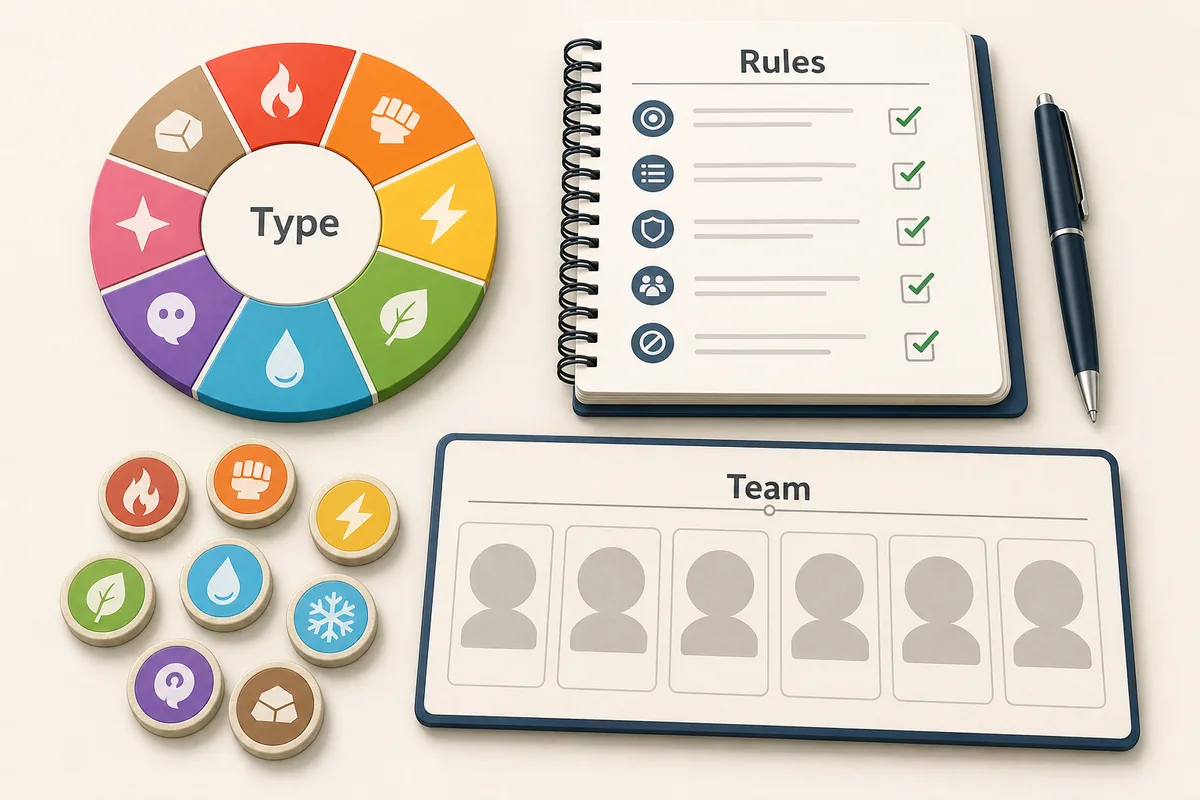
Core Rules Checklist
Use these rules as the baseline. Add stricter clauses only if they make the run clearer rather than more arbitrary.
- Pick one type first: Choose Fire, Water, Bug, Ghost, or any other single type before seeing your starter options. If you want the wheel to decide, spin once and keep the result.
- Allow shared-type Pokemon: A Pokemon is legal when one of its current types matches the chosen type. Water/Ground counts for Water and Ground; it does not need to be pure Water.
- Write evolution clauses: Decide whether pre-evolutions are legal when the final form gains the chosen type. If allowed, evolve them as soon as practical.
- Define the starter gap: If no chosen-type Pokemon is available at the start, use a temporary starter only until the first legal Pokemon can be caught or received.
- Set duplicate and legendary rules: Most runs are cleaner with one species line per team and no legendary, mythical, or event-only Pokemon unless the run is deliberately casual.
- Record every exception: Trade evolutions, fossils, gifts, regional forms, and special battle forms should be decided before they appear, not after they solve a hard fight.
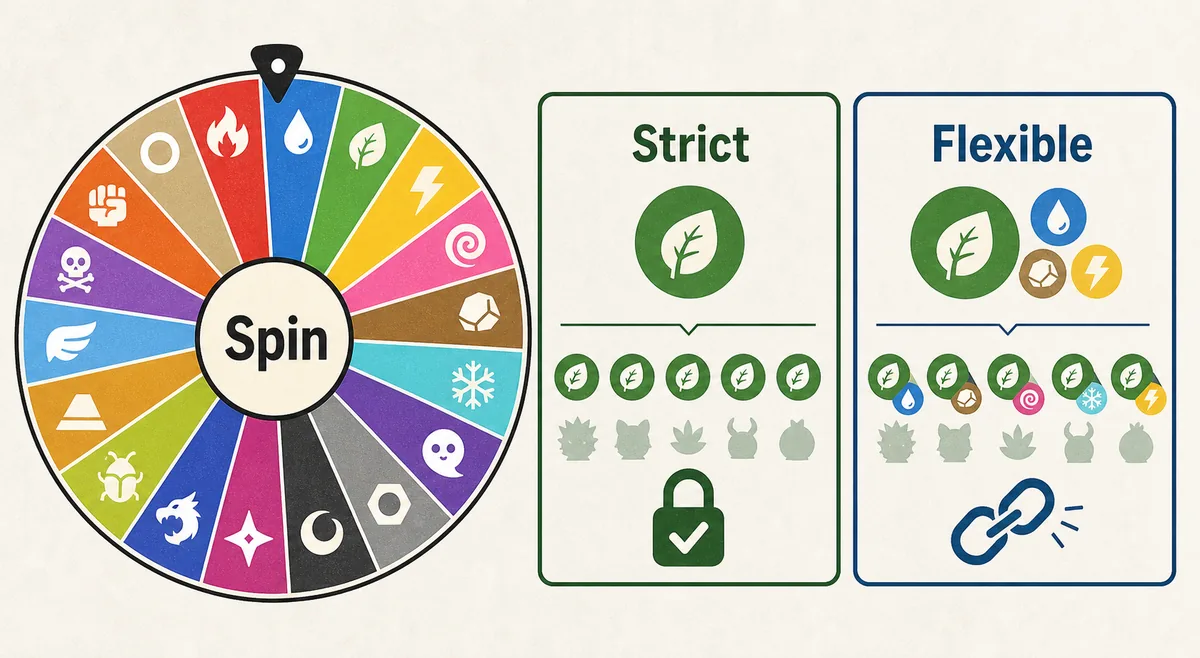
Strict vs Flexible Monotype Rules
Pick one column and stay consistent. Mixing strict and flexible clauses only after losses is what usually makes the challenge feel unfair.
| Decision | Strict run | Flexible run | Why it matters |
|---|---|---|---|
| Dual types | Allowed only if the chosen type is present now | Allowed if the final planned form gains the chosen type | Controls whether early routes are playable for rare types |
| Starter | Must be chosen type or replaced immediately | Temporary starter allowed until first legal catch | Prevents Ice, Dragon, Ghost, or Steel runs from stalling |
| Legendaries | Banned | Allowed only for casual or story-forced use | Keeps the challenge from turning into one overpowered carry |
| Trades and imports | No outside Pokemon | One egg or trade allowed if the type appears very late | Solves availability without hiding the advantage |
| Fainting | Box or release fainted Pokemon | Normal fainting allowed | Separates a Monolocke from a regular monotype run |
| Rerolls | No rerolls except impossible results | One to three rerolls before the first badge | Keeps the wheel useful without making it manual selection |
How to Choose a Type
The best type is not always the strongest type. For a first monotype challenge, choose a type that appears early enough to build a real team and has several secondary-type options. Water, Flying, Bug, Normal, Grass, and Poison are usually easier because many games offer them early.
Rare types can still be fun, but they need a grace clause. Ice, Dragon, Ghost, and Steel often appear later or have fewer early species. If you choose one of them, write whether you can use a temporary starter, trade in a low-level egg, or delay the challenge until the first legal encounter.
If you use Pokemon Roulette or the type wheel, spin before choosing the game if possible. That way you can match the type to a game where it is actually playable instead of forcing an awkward route with only one option.
- Easy first picks: Water, Flying, Normal, Bug, Grass, Poison.
- Harder picks: Ice, Dragon, Ghost, Steel, Fairy in older games.
- For streams or friend groups, let the wheel pick the type and let the player pick the game.
Dual-Type, Evolution, and Form Clauses
Most monotype communities allow dual-type Pokemon because the point is shared type identity, not purity. A Fire/Flying Pokemon fits a Fire run and a Flying run. This also gives you tools to cover weaknesses without breaking the theme.
Evolution clauses are where runs become messy. A Pokemon that gains your type later can be allowed, but the rule should be explicit. For example, a Pokemon whose final evolution gains Steel can be legal if you commit to evolving it as soon as possible and avoid using it as an unrelated carry for half the game.
Form changes and temporary battle mechanics should be handled conservatively. If a Pokemon only has your type during a temporary form, Mega form, or special battle state, treat it as illegal for strict runs unless your ruleset says that form is the whole point.
- Dual-type Pokemon are usually legal when they currently share the chosen type.
- Pre-evolutions can be legal if the final form gains the type and the clause is written first.
- Temporary battle-only type changes should not rescue an otherwise illegal team member in strict runs.
Monolocke Rules: When Monotype Meets Nuzlocke
A Monolocke adds Nuzlocke pressure to the monotype idea. You still choose one type, but you also limit catches and treat fainted Pokemon as gone. The clean version is: one legal encounter per area, only Pokemon of the chosen type may be used, fainted Pokemon are boxed or released, and every catch gets a nickname.
The hard part is encounter availability. If an area has no legal Pokemon, either skip the encounter or allow the first future legal encounter from that area only if your tracking method can stay honest. For most players, skipping empty areas is easier to audit.
Do not stack too many randomizer rules on top of a first Monolocke. Random starters, random wild encounters, and a single-type restriction can be enough. Random abilities, moves, items, and trainer teams may turn the run from difficult into unreadable.
- Monolocke = monotype restriction plus Nuzlocke catch and fainting rules.
- Skip areas with no legal type unless your rule sheet says otherwise.
- Use Pokemon Roulette for prompts, not for unlimited post-loss rerolls.
Using the Pokemon Type Wheel Fairly
The type wheel is useful because it removes argument from the first decision. Spin once, write the type, then choose the strict or flexible ruleset before playing. If you need a softer run, decide that before the spin instead of changing the rules after a bad result.
For group challenges, the fairest setup is to let the wheel choose a type and let each player pick a different game or rules column. That keeps the shared theme while respecting that some games have much better access to certain types.
A good wheel rule has an exit condition. For example: one spin decides the type, one reroll is allowed only if the chosen type has no legal Pokemon before the third gym, and the final result is locked once the first legal team member joins.
- Spin once for the type theme.
- Choose strict or flexible rules before the first battle.
- Use rerolls only for impossible or clearly late-availability types.
Common Mistakes That Make the Run Feel Worse
The most common mistake is using purity rules that block nearly every viable Pokemon. Pure-only runs can be interesting, but they are a separate challenge and often become thin quickly. Shared-type rules usually create better teams and more strategic decisions.
Another mistake is hiding exceptions. If you trade in a starter egg, allow a pre-evolution, or keep a temporary non-type Pokemon, say so in the rule sheet. Hidden convenience clauses make wins feel less earned and losses harder to interpret.
Finally, do not confuse a monotype challenge with a competitive monotype team. In a story run, availability, leveling, HM or field utility, and route pacing matter more than perfect battle coverage.
- Avoid pure-only rules unless you intentionally want a very narrow run.
- Do not add exceptions after a loss unless the run is truly impossible.
- Judge success by consistent rules, not by competitive team perfection.
External References
These references help distinguish monotype, Monolocke, and broader Nuzlocke-style challenge rules. Use them for context, then write your own run sheet before playing.
- Nuzlocke University Monolocke Variant - for the Monolocke definition and variant framing
- Smogon Monotype Challenge discussion - for community discussion of shared-type runs and early availability
- Official Pokemon Pokedex - for official species names and type references
Pokemon Monotype Challenge FAQ
What is a Pokemon monotype challenge?
It is a playthrough where every main team member must share one chosen Pokemon type. Dual-type Pokemon usually count as long as one of their types matches the chosen type.
Are dual-type Pokemon allowed in a monotype run?
Yes in most rulesets. They are often the most interesting part of the challenge because they keep the shared type while giving your team more coverage.
What if my chosen type is not available early?
Use a written grace clause: temporary starter until the first legal catch, one traded egg, or a delayed start. Choose the rule before the run begins.
Is a Monolocke the same as a monotype challenge?
No. A Monolocke combines monotype restrictions with Nuzlocke-style catch and fainting rules. A normal monotype run does not require permadeath unless you add it.
Can Pokemon Roulette choose my monotype run?
Yes. Use the Pokemon Type Wheel to choose the type, then lock the rules. Pokemon Roulette should add a fair prompt, not unlimited rerolls.
Should legendary Pokemon be allowed?
For strict runs, ban them. For casual runs, allow them only if the story forces them or if everyone agrees the run is more about theme than difficulty.
Turn the Type Into a Run Sheet
Spin a type, choose strict or flexible rules, then use the team generator to plan legal backups before the first major fight.
Spin the Type Wheel Pokemon Nuzlocke Rules