Pokemon Nuzlocke Rules: A Clear Rule Sheet Before Your First Catch
A Nuzlocke turns a normal Pokemon playthrough into a self-imposed challenge where every route, catch, and faint matters. This guide explains the standard Pokemon Nuzlocke rules, the clauses most players choose before starting, how hardcore and randomizer variants differ, and where Pokemon Roulette can add fair prompts without changing the run after a loss.
Quick Answer
The basic Pokemon Nuzlocke rules are simple: you may catch only the first valid encounter in each named area, a Pokemon that faints is permanently boxed or released, and every caught Pokemon gets a nickname. Those three rules create the emotional stakes that make the challenge memorable.
Before you start, write down your clauses. Decide whether duplicates can be skipped, whether gift Pokemon count as the area's encounter, whether static encounters are legal, how shiny Pokemon work, and what happens after a full team wipe. Clear clauses prevent mid-run arguments with yourself.
Do not begin with every variant at once. A first run should stay readable: standard rules, a duplicate clause if you want variety, and a simple route log. Once that feels comfortable, add hardcore level caps, randomizer settings, Soul Link rules, or Pokemon Roulette prompts.
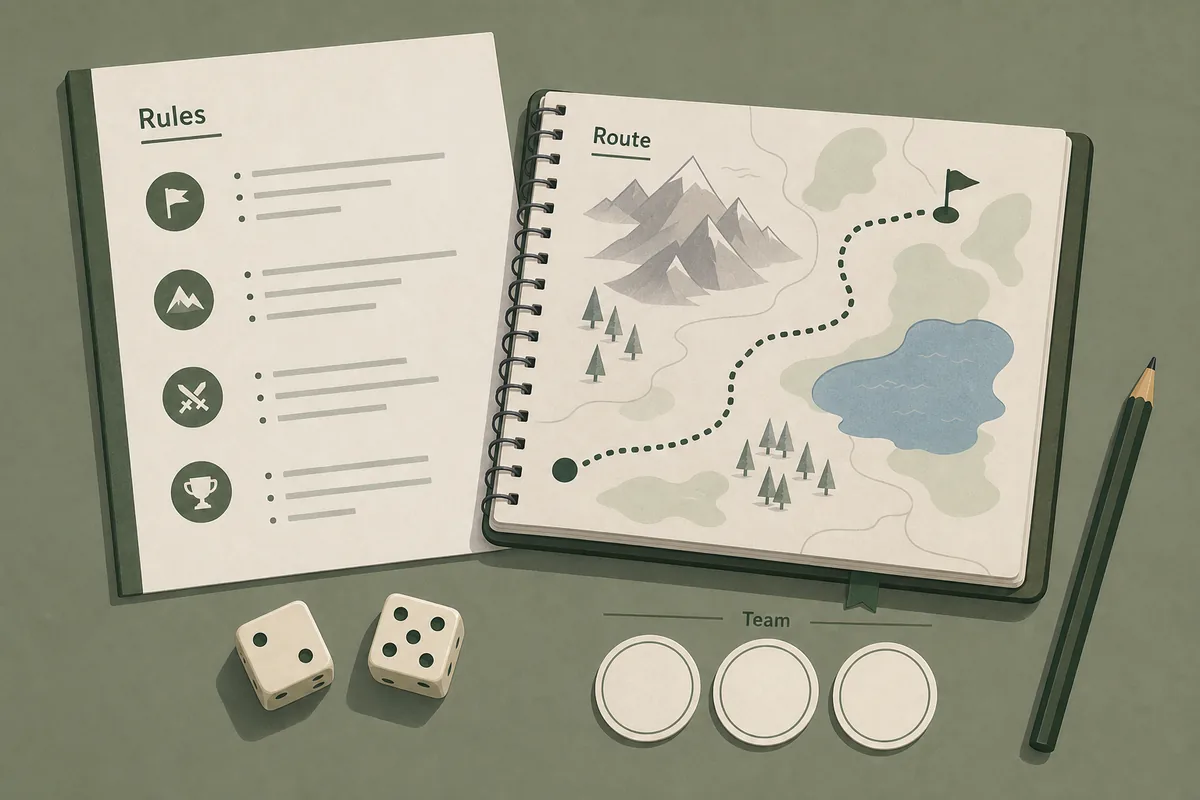
Core Pokemon Nuzlocke Rules
Use these as the baseline. Variants can add difficulty, but the run should still be easy to judge when something unexpected happens.
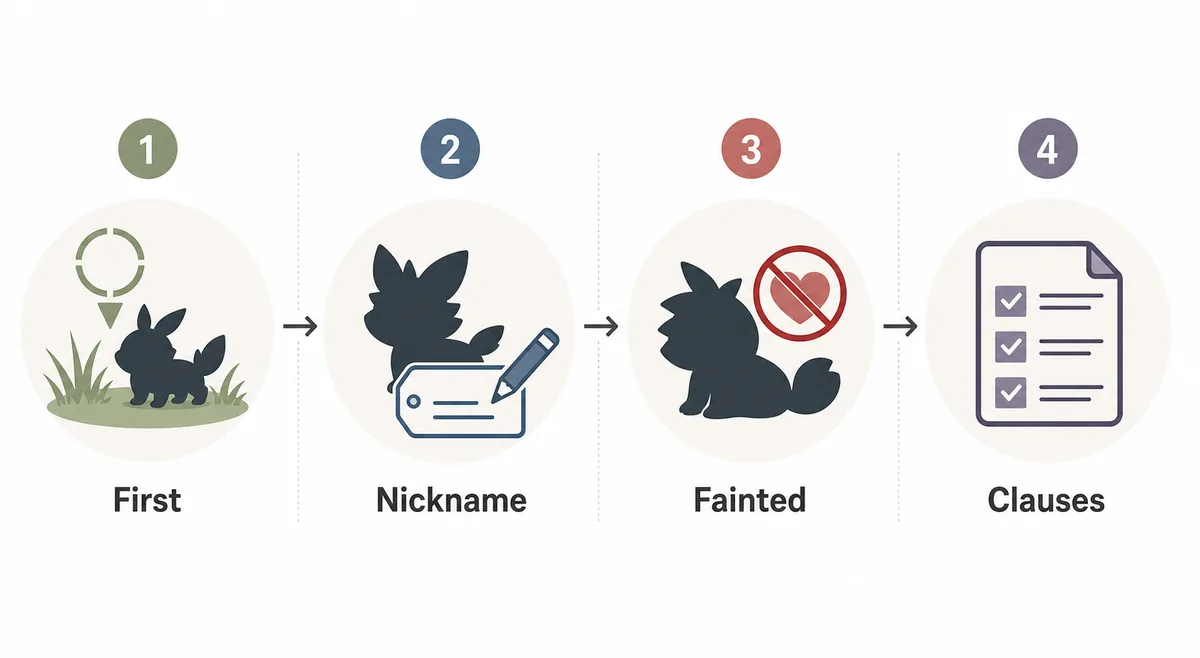
- First encounter only: In each named area, route, cave, town, or zone, only the first valid wild Pokemon may be caught. If it faints or runs away, the encounter is usually lost.
- Permanent fainting: If a Pokemon faints, it is treated as dead for the run. Most players move it to a death box so the record stays visible.
- Nicknames required: Every catch gets a nickname. This does not change battle difficulty, but it makes losses matter and keeps the run story readable.
- No hidden rewrites: Clauses, rerolls, gifts, trades, and wipe rules should be decided before the run, not after a painful battle.
Nuzlocke Rule Decisions to Make First
A written rule sheet does not need to be long. It only needs to answer the moments where players most often hesitate.
| Decision | Beginner-friendly choice | Stricter choice | Why it matters |
|---|---|---|---|
| Duplicate clause | Skip species you already caught | No skips unless the first encounter is impossible | Controls team variety |
| Gift Pokemon | Count gifts as separate bonus encounters | Gift uses the area's encounter | Prevents free team stacking |
| Static encounters | Treat each static Pokemon as a special encounter | Static uses the location encounter | Keeps legendary and fixed fights clear |
| Shiny clause | May catch shiny Pokemon but not always use them | No shiny exception | Separates luck from challenge legality |
| Wipe rule | Reset after a full party wipe | Continue only with boxed legal catches | Changes how punishing the run feels |
Common Clauses Explained
A clause is an exception you approve before the run begins. The duplicate clause is the most common because it avoids catching the same species across several routes. It can make the run more interesting, but it also makes team building easier, so write the exact version you want.
Gift and static Pokemon need special care. Some games give starters, fossils, eggs, or story Pokemon in ways that do not behave like wild encounters. You can count them as the location encounter, treat them as separate bonus encounters, or ban them entirely. Any choice is valid if it is consistent.
The shiny clause is mostly about fun. Many players allow catching a shiny even when it is not the first encounter, but then decide separately whether it can be used in battle. That keeps the rare moment without letting the rule sheet become a free reroll machine.
- Write clauses before choosing your starter.
- Keep one rule for gifts and one rule for static encounters.
- If a clause feels like a way to escape a bad result, narrow it.
How to Keep a Route Log
A route log is the easiest way to keep a Nuzlocke fair. Record the area name, first encounter, catch result, nickname, current status, and any clause used. You do not need a spreadsheet, but you do need enough detail to avoid catching twice in the same location.
Named areas matter more than map tiles. If the game labels two caves, floors, safari zones, or wild areas differently, decide whether they count separately before reaching them. For modern games with open zones, define your area rule in plain language before the first catch.
A good log also helps content creators and friend groups. Viewers can see why a Pokemon is legal, partners can compare encounters, and you can restart a future run without repeating the same confusion.
- Record area, encounter, catch result, nickname, and status.
- Mark deaths immediately instead of relying on memory.
- Use notes for duplicate skips, gifts, static encounters, and rerolls.
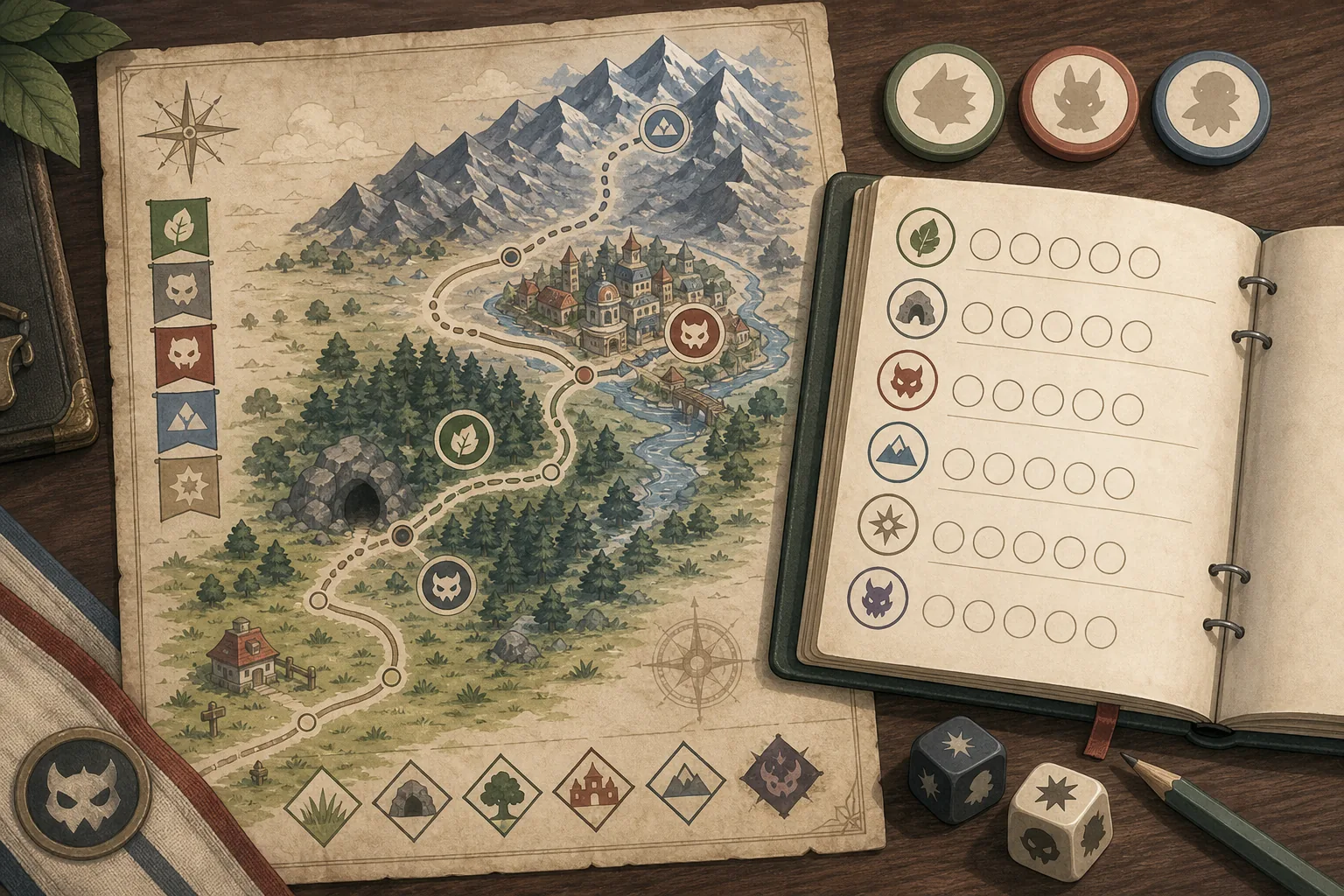
Standard, Hardcore, Randomizer, and Soul Link Variants
A standard Nuzlocke is best for a first attempt because the core rules are already enough to change how you play. You scout less recklessly, preserve useful team members, and think harder before every risky switch.
Hardcore Nuzlocke rules usually add level caps, no battle items, and set-style switching. These rules make boss fights cleaner because you cannot overlevel or heal through mistakes. Use the dedicated hardcore guide when you want that stricter version.
Randomizer and Soul Link variants are different boundaries, not replacements for the core rules. A randomizer changes what appears in the game. Soul Link links your encounter and death rules to another player. Both should still begin with a written Nuzlocke rule sheet.
- Start standard if this is your first run.
- Add hardcore rules when you want stricter battle decisions.
- Use randomizer rules only after defining what the randomizer changes.
- Use Soul Link rules when two players share linked encounters and deaths.
Where Pokemon Roulette Fits
Pokemon Roulette is useful as a prompt layer, not as the rule authority. Spin before the run for a starter theme, a type preference, a limited side objective, or a stream challenge. Then write that result into the rule sheet.
Avoid spinning after a loss to undo the consequences. If a Pokemon faints, the Nuzlocke rule should decide what happens. Roulette is strongest when it adds flavor and replay value while the legal rules remain stable.
- Use one pre-run spin for a theme or side goal.
- Use the challenge randomizer for optional tasks.
- Use the team generator after a wipe to plan the next attempt.
Common Beginner Mistakes
The first mistake is changing rules mid-run. A hard fight can make any rule feel too strict, but changing it after the result makes the challenge less satisfying. Keep a next-run notes section instead.
The second mistake is vague area definitions. If you are unsure whether a cave floor, wild area, den, raid, gift, or static Pokemon counts, decide before the encounter appears. The third mistake is adding too many restrictions before learning the baseline challenge.
A good first Nuzlocke should be dramatic, not confusing. Keep the rules short, log the run, and only add variants when they solve a real problem or create a style you actually want to play.
- Do not rewrite rules after a death.
- Define areas before ambiguous encounters appear.
- Do not stack hardcore, randomizer, and Soul Link rules on your first attempt.
Useful References
These sources support official Pokemon context and community challenge background without linking to unsafe ROM downloads.
- Official Pokemon Pokedex - for official species names, typing, and Pokemon context
- Nuzlocke University - for common community rule language and beginner clause examples
Pokemon Nuzlocke Rules FAQ
What is the easiest Nuzlocke rule set for beginners?
Use first encounter, permanent fainting, nicknames, and a duplicate clause. Avoid hardcore level caps and randomizers until you understand the basic rhythm.
Does a gift Pokemon count as an encounter?
It depends on your rule sheet. Beginner runs often allow gifts as bonus encounters, while stricter runs make the gift use that location's encounter.
What happens if my whole team wipes?
Most players reset the run after a full party wipe. Some allow rebuilding from legal boxed Pokemon. Choose one before starting.
Can I use healing items in a standard Nuzlocke?
Yes, standard Nuzlocke rules usually allow items. If you want no battle items and level caps, you are moving toward hardcore rules.
Should Pokemon Roulette decide my catches?
Use it for themes, prompts, and side objectives. The actual legal catch should still follow your first-encounter and clause rules.
Is trading against Nuzlocke rules?
Trading is not part of the usual baseline rules, so decide it before the run. Most solo runs ban outside trades, while trade evolutions may be allowed if the same legal Pokemon is immediately returned.
Do Nuzlocke rules still count during partner trainer battles?
Yes. Unless your written rules create a special exception, a faint during a partner or double battle still counts as a permanent loss. Define how shared encounters work before entering the area.
Write the Rules, Then Add One Spin
Once your catch, fainting, and clause rules are written down, use Pokemon Roulette for one prompt that gives the run a memorable direction.
Spin Pokemon Roulette Read Randomizer Rules