Pokémon Monotype Team Guide: How to Build a Single-Type Team
A good monotype team is more than six Pokémon that happen to share a type. You need a format, a win condition, a way to create safe turns, and a plan for the weaknesses that the shared type exposes. This guide turns those choices into a repeatable team-building process for casual runs and competitive Monotype formats.
Quick answer: build around a plan, not a type list
To build a Pokémon monotype team, choose the game or format first, select one type, pick an anchor that can make progress, then add teammates that cover defensive gaps and create safe turns. A shared type is the constraint; it is not the team strategy by itself.
Start by writing the team’s job in one sentence: for example, break through bulky teams, win with speed, set hazards and force switches, or create a late-game setup finish. Then check whether the type has enough attackers, switch-ins, speed control, utility, and backup options for that plan.
For a story monotype run, availability and route timing matter more than perfect competitive efficiency. For Pokémon Showdown or another competitive format, use the exact rules and current tier resources for that format. Do not combine a casual run sheet with a competitive sample team without checking the boundary.
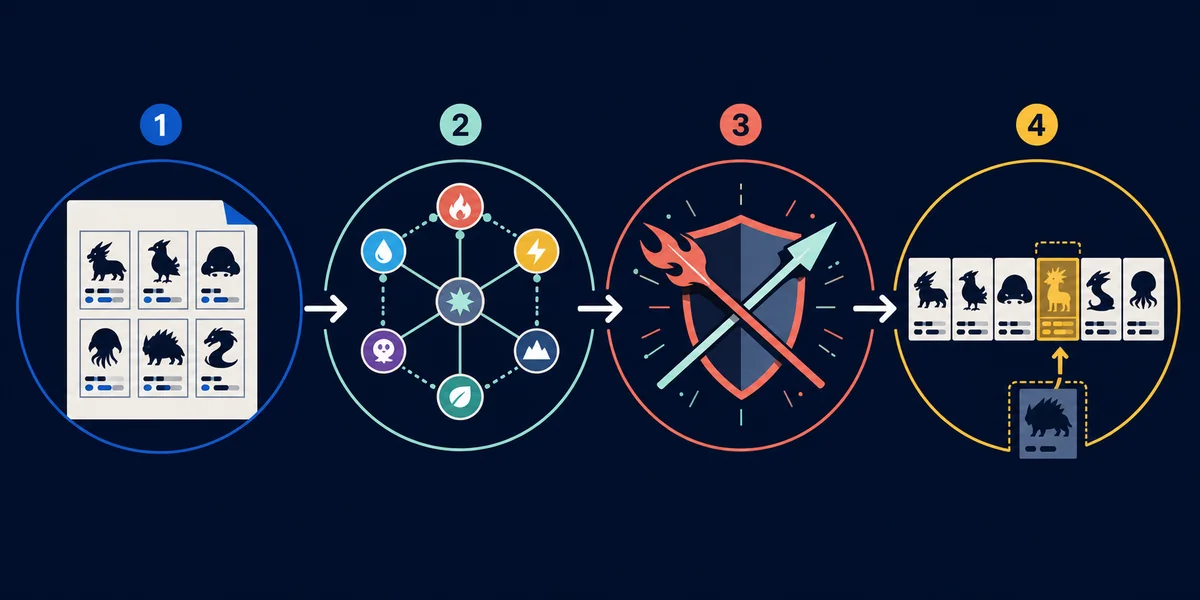
Six steps for building a monotype team
Use the sequence below before you start filling every slot. It keeps the single-type rule visible without letting the rule replace normal team-building decisions.
- Lock the format: Choose a specific game, story ruleset, Pokémon Showdown format, or tournament rule set. The legal pool and the meaning of a good team change with the format.
- Choose the type with evidence: Check when the type becomes available, how many species and secondary types exist, and which weaknesses the game or format makes common.
- Pick one anchor: Start with a Pokémon, core, hazard plan, weather idea, or setup route that can create progress instead of merely matching the theme.
- Add safe turns: Look for resistances, immunities, recovery, pivoting, screens, speed control, or other ways to bring your main plan into play.
- Fill the missing jobs: Add damage, defensive switching, field control, disruption, and a backup win route. One Pokémon may cover several jobs.
- Test and revise: Play a small sample of real battles or route fights, write down the failure point, and replace one slot at a time rather than rebuilding at random.
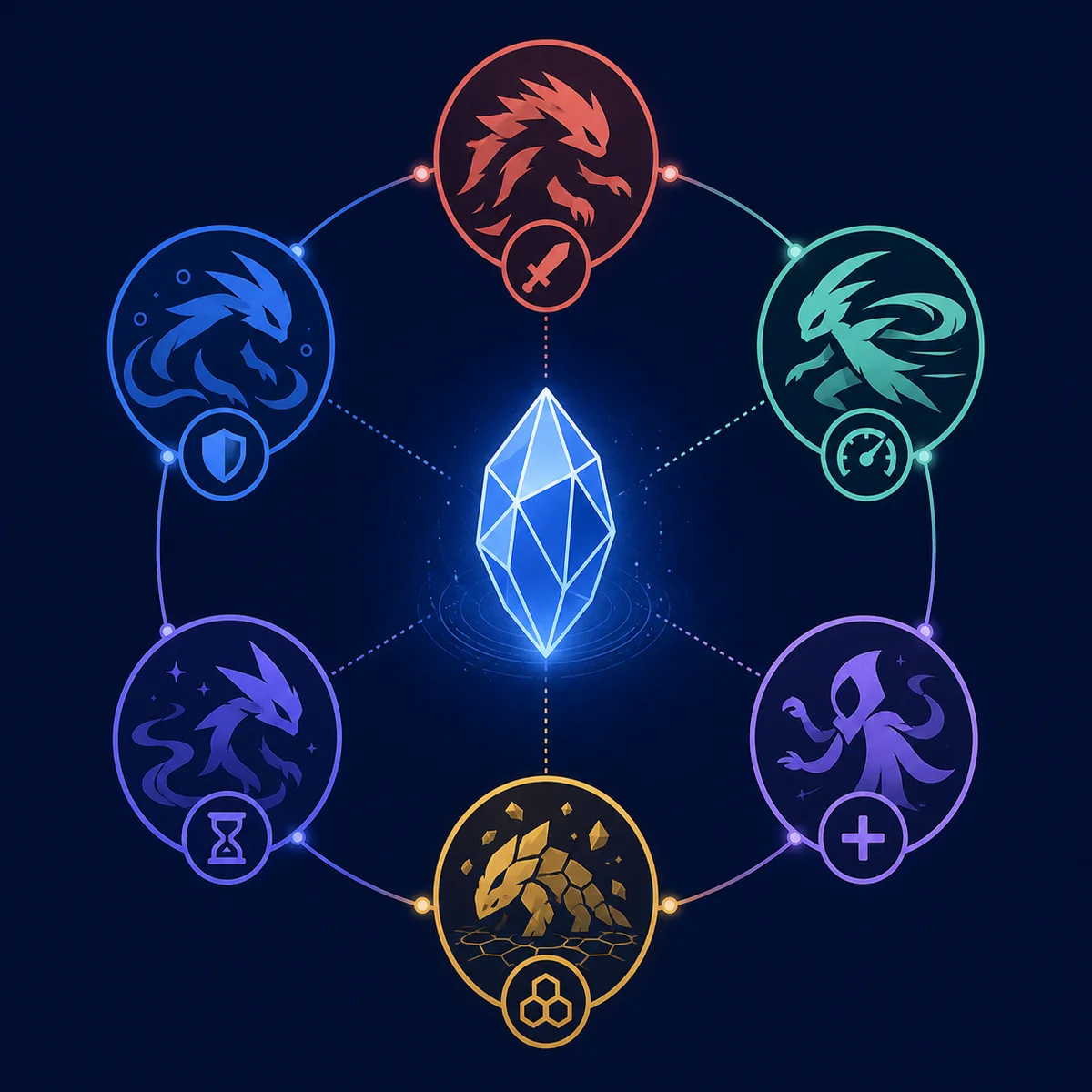
The roles a single-type team still has to cover
These are jobs, not six rigid classes. A strong monotype team often uses one Pokémon for two or three jobs, but every important job should have a clear owner.
Primary progress
The attacker, setup user, hazard plan, or weather route that turns a safe turn into meaningful damage or positioning.
Defensive entry
A resistance, immunity, bulky pivot, or recovery user that can enter without sacrificing the whole team to one prediction.
Speed control
Natural speed, priority, Tailwind, Trick Room, paralysis, Choice Scarf, or another method of deciding who acts first.
Utility and disruption
Status, Taunt, screens, phazing, scouting, item pressure, or another tool that stops the opponent from playing freely.
Field control
Hazards, hazard removal, weather, terrain, or positioning tools that make repeated switching favorable for your side.
Endgame route
A cleaner, setup finisher, priority sequence, or reliable damage path for the turns after the opponent’s answers are weakened.
Monotype coverage check before you commit
A type chart shows weaknesses, but it does not tell you whether your team can actually answer them. Use this table as a short review of the finished draft.
| Check | What to inspect | A useful question |
|---|---|---|
| Shared weakness | Which common attacking types hit several members for super-effective damage? | Can one switch-in, immunity, or speed plan stop the pressure? |
| Safe switches | Which members can enter after a teammate is forced out? | Do you have more than one answer, or only one fragile prediction? |
| Damage routes | Which targets resist your main STAB moves and what hits them? | Can the team make progress if the first attacker is checked? |
| Speed | Which threats move first and which tools change that order? | Do you have priority, speed control, or a bulky emergency line? |
| Field effects | Hazards, removal, weather, terrain, screens, or status pressure. | Does the field plan help your type or merely add another task? |
| Endgame | The last two or three turns after answers are chipped or removed. | What does a winning position look like for this exact roster? |
Choose a type that gives the team room to breathe
The strongest-looking type is not automatically the best choice. For a story run, the first question is when you can obtain legal team members. A type with excellent late-game Pokémon can still be frustrating if the opening hours offer only a temporary starter or one narrow encounter. Write that availability rule before the run starts.
For a competitive team, start with the format’s legal pool and current rules rather than a general type ranking. The same type can play very differently across generations, tiers, and battle formats. A sample team from one format is a learning reference, not a universal answer for every Pokémon game.
Use the type as a design constraint. Ask what the type does well, what its secondary types add, and whether those partners create actual safe turns. A Water team may use Ground or Steel partners to change its defensive profile; a Ghost team may value immunities and forcing switches; a Grass team may need a careful answer to Fire, Ice, Flying, Bug, and Poison pressure. The point is not to memorize a winning type, but to understand the trade-offs before choosing six names.
- Story run question: can I catch or receive enough legal members before the next major fight?
- Competitive question: which ruleset, generation, tier, and team preview assumptions am I building for?
- Planning question: does this type offer at least two ways to make progress when the obvious anchor is checked?
Build a core before filling the last four slots
Choose two or three members that already make one another easier to use. A core might combine an attacker with a pivot, two Pokémon that cover each other’s weaknesses, or a field-control user with a cleaner. If the first three choices do not create a clear kind of progress, adding three more theme-compatible choices usually produces a team that looks coherent but plays passively.
Then name the first bad matchup. If your core loses to a faster threat, you need speed control or priority. If it loses to a wall, you need stronger coverage, disruption, setup, or a way to force repeated switches. If it loses to hazards, you need removal or a plan that does not depend on constant switching. This is more useful than adding a sixth Pokémon because its type combination looks attractive.
Keep the core small enough to revise. A monotype team should have an identity, but it should not be so precious that you refuse to replace a member who never gets a safe turn. Treat every slot as a job with evidence behind it.
- Write the core’s win condition in one sentence.
- List the first two threats that stop that condition.
- Assign a real answer to each threat before adding another general-purpose attacker.
Keep competitive Monotype separate from a story monotype run
The phrase “monotype team” can describe two different jobs. In a story challenge, you are managing encounters, levels, route pacing, field moves, gifts, evolutions, and the next boss. In a competitive Monotype format, you are building for a defined legal roster, battle rules, team preview, and an opponent who can deliberately target the type’s weaknesses.
That difference changes the page you should read next. Use a challenge rules guide for starter gaps, dual-type clauses, trade exceptions, and Monolocke rules. Use a general team-building guide for role assignment and testing. Use current format resources for competitive sample teams, legality, and tier-specific details. A casual article should not present a competitive importable as a guaranteed story-mode solution.
You can still learn from both sides. Competitive teams teach you to identify win conditions, speed control, and counterplay. Story runs teach you to value availability, reliable healing, and practical route decisions. Combine the lessons only after deciding which problem your own team is solving.
- Challenge rules belong in the run sheet: type eligibility, starter grace, evolution clauses, and fainting policy.
- Competitive resources belong in the format notes: legality, tier, generation, and current sample-team context.
- Do not call a team “best” without naming the game or format it was built for.
Test one matchup, then revise one slot
A team is not finished when all six slots are filled. Play enough battles or route encounters to see the team’s first repeated failure. Write the exact moment: a fast threat sweeps after one forced switch, a wall stalls the main attacker, hazards remove the only safe pivot, or the team wins early but has no endgame. Specific failure notes produce better changes than a vague feeling that the team is weak.
Change one slot at a time when possible. If you replace half the roster after one loss, you will not know which change helped. A small change also protects the team’s identity: keep the anchor, replace the member that failed its job, and then retest the same type of matchup.
A manual weakness check is useful, but it cannot simulate turns, damage ranges, move choices, or the availability of a safe switch. Use the Pokémon Team Planner to spot repeated type weaknesses, then test the actual team in the game or format where you intend to play.
- Record the matchup, the failed job, and the smallest plausible repair.
- Retest the same problem after changing one member, item, move, or speed plan.
- Keep a backup route so one counter or unlucky turn does not make the whole team unusable.
External references for deeper research
Use these sources to verify the format or species details behind your draft. They are references, not substitutes for naming the exact game or ruleset in your own team plan.
- Smogon Monotype format resources — for competitive format context and current rules-oriented research
- Pokémon Showdown — for testing a competitive draft in the format you selected
- Official Pokémon Pokédex — for official species names and type reference
Pokémon monotype team FAQ
What is a Pokémon monotype team?
It is a team in which every main member shares one chosen Pokémon type. Dual-type members usually qualify when the chosen type is one of their current types, but the exact rule depends on the game or format.
How do I build a competitive monotype team?
Choose the exact competitive format first, identify a win condition, build a small core, add safe switches and speed control, check the type’s common weaknesses, then test and revise against real matchups. Current tier and legality resources matter more than a generic type ranking.
Are dual-type Pokémon allowed in monotype teams?
Often yes, because a shared-type rule usually means that one current type matches the chosen type. If you are running a stricter challenge, write the dual-type and evolution clause before the first battle.
What is the difference between a monotype team and a Monolocke?
A monotype team describes the shared-type restriction. A Monolocke adds Nuzlocke-style encounter and fainting rules. A normal monotype run does not automatically include permadeath.
Should I choose the type before or after the game?
For a planned story challenge, choose the game and check availability before locking the type. For a prompt-driven run, spin the type first and use a written grace clause if the game has no legal early encounters.
Can a Pokémon team planner build the team for me?
A planner can reveal type distribution and repeated weaknesses, but it cannot choose your win condition or replace battle testing. Use it as a review step after you have a reason for each team slot.
Turn one type into a playable team plan
Choose the format, write the win condition, check the shared weaknesses, and test one change at a time. If you need a random prompt, let the type wheel choose the theme before you build the roster.
Spin the Type Wheel Open Team Planner