How to Build a Pokémon Team: A Practical Team-Building Guide
Learning how to build a Pokémon team is less about collecting six individually powerful picks and more about giving the whole party a clear plan. This guide walks from format choice and team roles to type coverage, testing, and the one-slot changes that make a team more reliable.
Quick answer: build a plan, not a list
To build a Pokémon team, choose the format and win condition first, add partners that create safe turns, check shared weaknesses, then test the team and change one slot at a time. Six strong Pokémon can still lose if they all need the same turn, share an uncovered weakness, or have no way to handle faster opponents.
For a general-purpose team, aim for a clear offensive idea, at least one reliable switch into common threats, speed control or priority, utility, and a backup plan. Story teams and Nuzlocke teams can be less symmetrical because survival, availability, and the next boss matter more than perfect competitive coverage.
Use the guide to make the first draft, then check the finished party with the Pokémon Team Planner. The planner is useful for spotting repeated defensive weaknesses; it cannot decide your win condition or replace testing in the format you actually play.
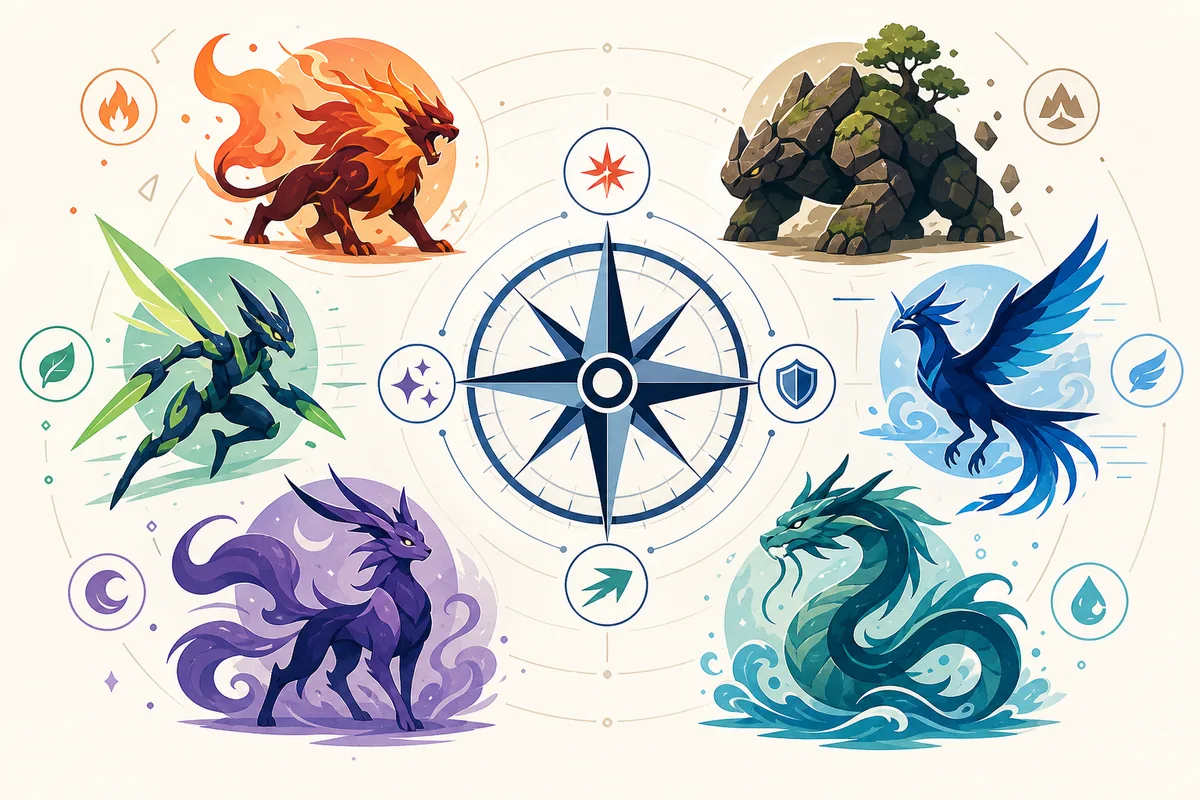
Six jobs to cover when you build a Pokémon team
A Pokémon can cover several jobs, so this is not a demand for six rigid classes. It is a checklist for making sure the team can create progress, survive pressure, and recover after the first plan is disrupted.
- Win condition. Know which attacker, setup plan, speed mode, or endgame sequence turns a good position into a win.
- Damage pressure. Keep enough offensive power to punish passive turns instead of relying on one move or one Pokémon to do everything.
- Defensive pivot. Include a resistance, immunity, recovery option, or bulky switch that buys a safer turn when the lead plan fails.
- Speed control. Use natural speed, priority, Tailwind, Trick Room, paralysis, or another method of deciding who acts first.
- Utility. Status, disruption, hazard control, screens, redirection, scouting, or item pressure can create the turn your core needs.
- Backup plan. Prepare a second route to make progress so one bad matchup, miss, or counterpick does not end the game immediately.
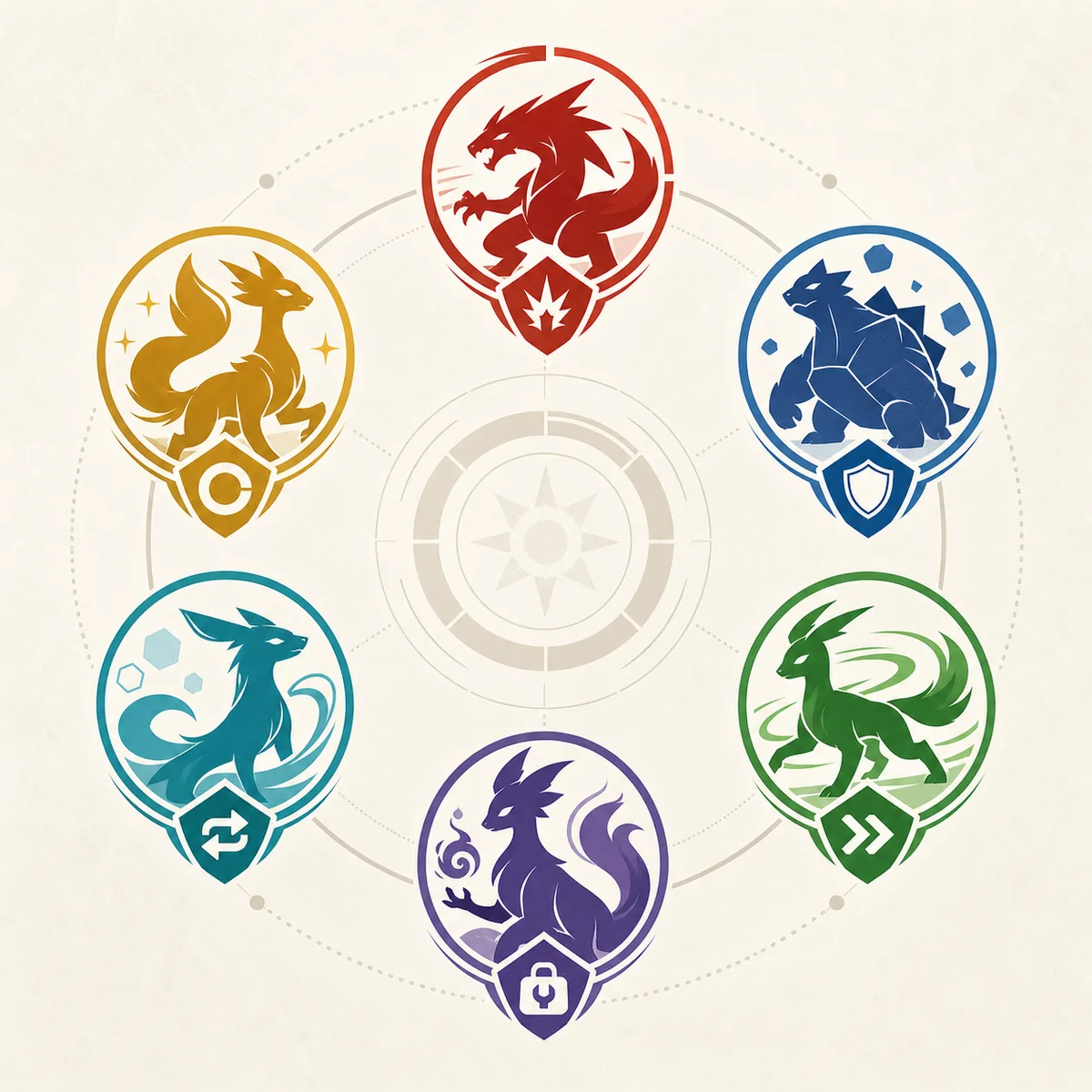
Choose a team direction before choosing the last four Pokémon
These directions are starting points rather than rankings. The best choice depends on the game, rules, available Pokémon, and the way you prefer to play.
| Team direction | Main idea | Useful support | Common failure |
|---|---|---|---|
| Balanced offense | Use one or two strong attackers while rotating through safe defensive turns. | Resistances, recovery, speed control, and a second damage route. | The team becomes passive if the core cannot convert positioning. |
| Fast offense | Create immediate pressure before the opponent can set up or gain momentum. | Priority, speed control, disruption, and a flexible lead. | A single speed-control answer can make every slot feel too fragile. |
| Bulky control | Win through denial, recovery, status, hazards, or repeated favorable trades. | Reliable healing, hazard control, strong resistances, and a closer. | The team can lose if it never develops enough damage. |
| Setup or snowball | Protect one threat until boosts or a board advantage make it difficult to stop. | Redirection, screens, pivoting, status protection, and backup offense. | The setup turn is predictable or the main threat is forced out. |
| Challenge-run team | Prioritize legal availability, survival, and answers to the next section of the game. | Encounter flexibility, safe switches, recovery, and replacement options. | Competitive balance matters less than practical resources and information. |
1. Decide the format and the goal first
The same six Pokémon can be excellent in one ruleset and awkward in another. Singles rewards repeated switching and individual matchup control, while doubles often values speed control, positioning, spread moves, protection, and partner interaction. A story playthrough asks whether the party can handle the next route and boss; a competitive ladder asks whether the plan works against a moving field of common teams.
Write one sentence before you choose the roster: “This team wins by keeping fast pressure on the opponent,” “This team protects one setup threat,” or “This Nuzlocke party survives the next gym with safe replacements.” If the sentence contains four unrelated win conditions, narrow it down. A clear sentence makes every later slot easier to judge.
Also lock the practical restrictions. Check the generation, battle format, level rules, banned moves or species, available encounters, and whether items or abilities change the matchup. When the rules are unclear, use a conservative team concept and label it as general guidance instead of promising that one build is legal everywhere.
- Name the format before choosing the final moves.
- Write one win-condition sentence.
- List the three threats or battles the team must answer first.
- Separate evergreen principles from game-specific mechanics.
- Leave one slot flexible until the first test results arrive.
2. Start with a core that creates safe turns
A core is a small group of Pokémon that helps one another do something useful. It might be an attacker plus a partner that covers its weakness, two Pokémon that pressure different defensive types, or a defensive pair that creates repeated switch opportunities. The important question is not whether the species look strong on paper; it is whether one member creates the turn the other member needs.
Look for complementary damage and complementary answers. If the first attacker is physical, a special attacker can stop the opponent from winning with one defensive wall. If the core is slow, add a reason that slow turns are safe, such as Trick Room, disruption, bulk, or reliable priority. If the core depends on setup, identify what protects the setup turn and what happens when the boost is denied.
Do not fill the remaining slots by picking four favorites at random. For each new addition, write the job it performs, the threat it answers, and the teammate it helps. A Pokémon that performs no unique job may still be fun in a casual party, but it should not be treated as a necessary competitive slot without test evidence.
- Pair a win condition with a partner that creates safe turns.
- Keep physical and special pressure in mind.
- Give every new slot a primary job and a clear target.
- Prefer useful overlap over six isolated gimmicks.
3. Check type coverage and safe switches
Type coverage is not only a list of super-effective moves. It is also a map of what can switch in when the opponent attacks. A party with many strong moves can still collapse if three members share the same weakness and no remaining slot resists or is immune to that damage. Review both sides: what can your team hit, and what can your team safely absorb?
Use the site’s Pokémon Weakness Chart for the detailed eighteen-type relationships, then review the exact species and any second type. Dual types can turn a normal weakness into a 4× weakness, cancel a weakness with a resistance, or create an immunity. Abilities, items, temporary type changes, and the game generation can change the practical answer, so treat the chart as a starting point rather than a complete battle simulation.
A useful first pass is to mark repeated weaknesses, repeated resistances, and important immunities. Then ask whether the team has at least one safe response to the attacks you expect most often. Perfect coverage is unrealistic; the goal is to know which matchup is bad, which slot takes the first hit, and which backup plan stops that matchup from deciding every battle.
- Count shared weaknesses before adding another similar type.
- Check the second type and ability, not only the species name.
- Keep at least one practical switch for common threats.
- Use the full weakness chart when a matchup is uncertain.
4. Add speed control, utility, and recovery
Many first drafts focus on damage and forget the turns between attacks. Speed control determines whether your plan happens before the opponent’s plan. Utility creates those turns: status, Taunt, Encore, screens, redirection, hazards, hazard removal, scouting, pivot moves, protection, and item disruption can all matter more than a small amount of extra damage.
Recovery is another form of tempo. A Pokémon that can heal, regain position, or safely pivot can answer a threat more than once. A powerful attacker that only works at full health may need a partner that buys it a second entry. Conversely, a team with too much passive recovery and not enough pressure may survive but never finish the game. Balance the ability to stay in with the ability to make progress.
Give the team a simple lead decision tree. Against fast offense, start with speed control or disruption. Against a slow defensive team, lead with enough pressure to stop free setup. Against an unknown opponent, choose the lead that reveals the least while still allowing a safe pivot. You do not need a different six Pokémon for every matchup, but you do need more than one opening line.
- Decide how the team handles faster opponents.
- Add at least one utility effect that creates a safe turn.
- Give important attackers a way to re-enter the field.
- Avoid a roster that only survives or only attacks.
5. Test the team and replace one slot at a time
Testing is where a team stops being a theory. Play several games with the same six and record the first point where the plan breaks: you may lose speed control, fail to damage a common wall, lack a safe switch, or discover that one Pokémon never gets a useful turn. Do not change the whole roster after every loss. A single loss can be variance; a repeated pattern is evidence.
Use a short review after each set. What did the opponent threaten? Which slot did you bring but never use? Which move was always clicked, and which move was never safe? Did the lead work because of the team plan or because the opponent made a mistake? These questions produce a better replacement than simply copying the Pokémon used by the winner.
When you replace a slot, keep the original job in mind. If the team lost to Ground pressure, choose a replacement that answers Ground while preserving the team’s speed or damage plan. If the team lacked a way to close games, do not only add another wall. Change one variable, play another set, and compare results. The goal is a team that makes its intended decisions more often.
- Test the same six long enough to see repeated patterns.
- Record the first broken decision, not only the final result.
- Replace one slot with one hypothesis.
- Recheck the type chart and team planner after each meaningful change.
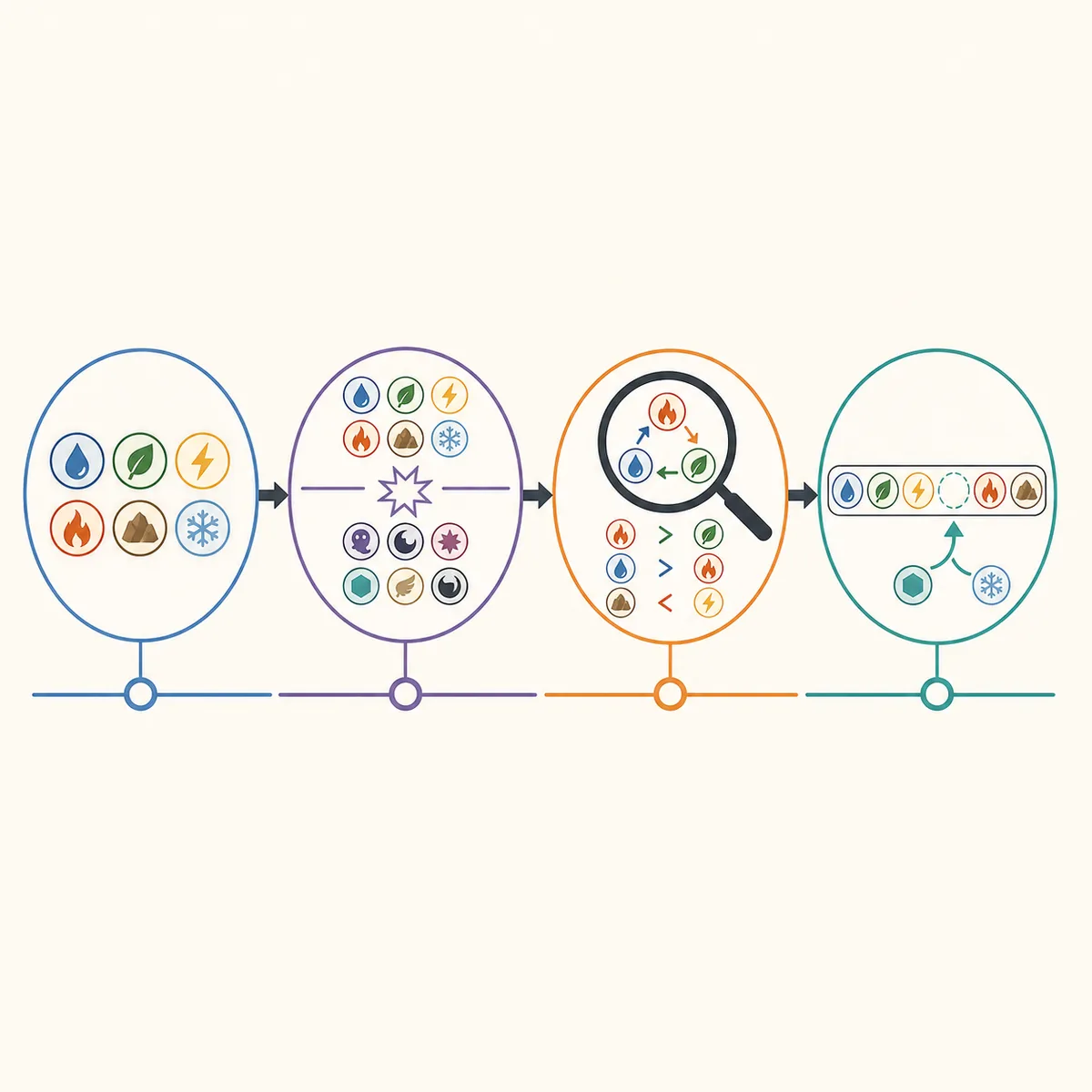
6. Adapt the method for story teams and Nuzlocke runs
A casual story team does not need to imitate a tournament roster. Availability, friendship, favorite species, move access, healing resources, and the next boss often matter more than a perfect role matrix. Build around a few dependable answers, keep a reasonable balance of damage and resistance, and allow a favorite Pokémon to stay if it makes the playthrough more enjoyable. The best team is the one you can actually use.
Nuzlocke teams need an extra layer of risk management. A Pokémon that looks average in a normal playthrough may be valuable because it has a safe matchup, a useful immunity, or a reliable replacement path. Track encounters, consider duplicate and gift clauses, and avoid treating a single chart weakness as an automatic death sentence. The goal is to preserve options before a major fight, not to force a fixed competitive composition.
Random generation can be a fun starting point for either mode. Use the Random Pokémon Team Generator or the roulette for inspiration, then apply the same checks: what is the team trying to do, which weaknesses repeat, which member can switch in, and what happens when the first plan fails? Randomness creates the puzzle; your decisions turn it into a playable team.
- Prioritize availability and the next battle in story mode.
- Treat Nuzlocke replacements and safe switches as resources.
- Use random picks as prompts, not as proof that the team is balanced.
- Keep the rules visible so a reroll does not quietly change the challenge.
How to build a Pokémon team FAQ
How many attackers should a Pokémon team have?
There is no universal number. Many teams use two or three main damage routes plus support, but the right mix depends on singles or doubles, the format rules, and whether the team wins through setup, speed, control, or repeated switching. Start with the win condition and make sure the rest of the roster helps it create progress.
Should I choose Pokémon by type or by role first?
Choose the team goal and roles first, then use types to find compatible candidates. Starting with six types can leave you with no speed plan, no safe switch, or no way to finish a game. Types are essential for checking coverage, but they should serve the team’s plan rather than replace it.
Can I use a random Pokémon team as a serious starting point?
Yes, as long as you treat it as a draft. Check the random team for repeated weaknesses, missing speed control, physical and special balance, legal moves, and a realistic win condition. Keep the fun surprise, then replace only the slots that fail a specific job.
How do I know which Pokémon to replace?
Look for repeated evidence across several games. A slot is a replacement candidate when it rarely gets a useful turn, duplicates another member without adding a new answer, or fails the same important matchup every time. Replace it with a clear hypothesis and test again instead of changing the whole team at once.
Is a Pokémon Team Planner enough to build a good team?
A planner is useful for checking type distribution, shared weaknesses, and resistances, but it cannot evaluate your decision-making, moveset, lead choices, or the rules of a particular format. Use the planner for static checks, then test the team in the game or battle simulator you actually play.
How should a Nuzlocke team be different?
A Nuzlocke team should value survival, availability, safe matchups, healing access, and replacement options. You do not need a perfect competitive composition. Keep the rules consistent, prepare for the next major fight, and avoid risking the whole run for a small amount of theoretical coverage.
What is the simplest team-building rule for a beginner?
Give every team member a reason to be there. Write its main job, the threat it answers, and the teammate it helps. If you cannot explain the slot, test whether a different Pokémon solves a real problem more reliably.
Reference notes
Team-building principles vary by game and format. These references provide official type information and established competitive strategy context; the recommendations above are a practical editorial framework, not a universal legality ruling.
- Official Pokémon Pokédex — Use the official reference for species and type details.
- Smogon team-building guide — A deeper competitive perspective on cores, roles, synergy, and testing.
- Smogon Strategy Dex — Format-specific sets and strategy context; always check the active game and rules.
Turn the guide into a team you can check
Draft your six Pokémon, review shared weaknesses and resistances, then return to testing with one clear change at a time.
Open Pokémon Team Planner Generate a starting team