Pokemon TCG Draft Rules: How to Draft and Build a 40-Card Deck
A Pokemon TCG draft turns sealed packs or a reusable card pool into a pick-by-pick deck-building challenge. This guide separates official Limited rules from casual variants, then gives you a practical draft order, deck skeleton, and host checklist.
Quick answer: what are Pokemon TCG draft rules?
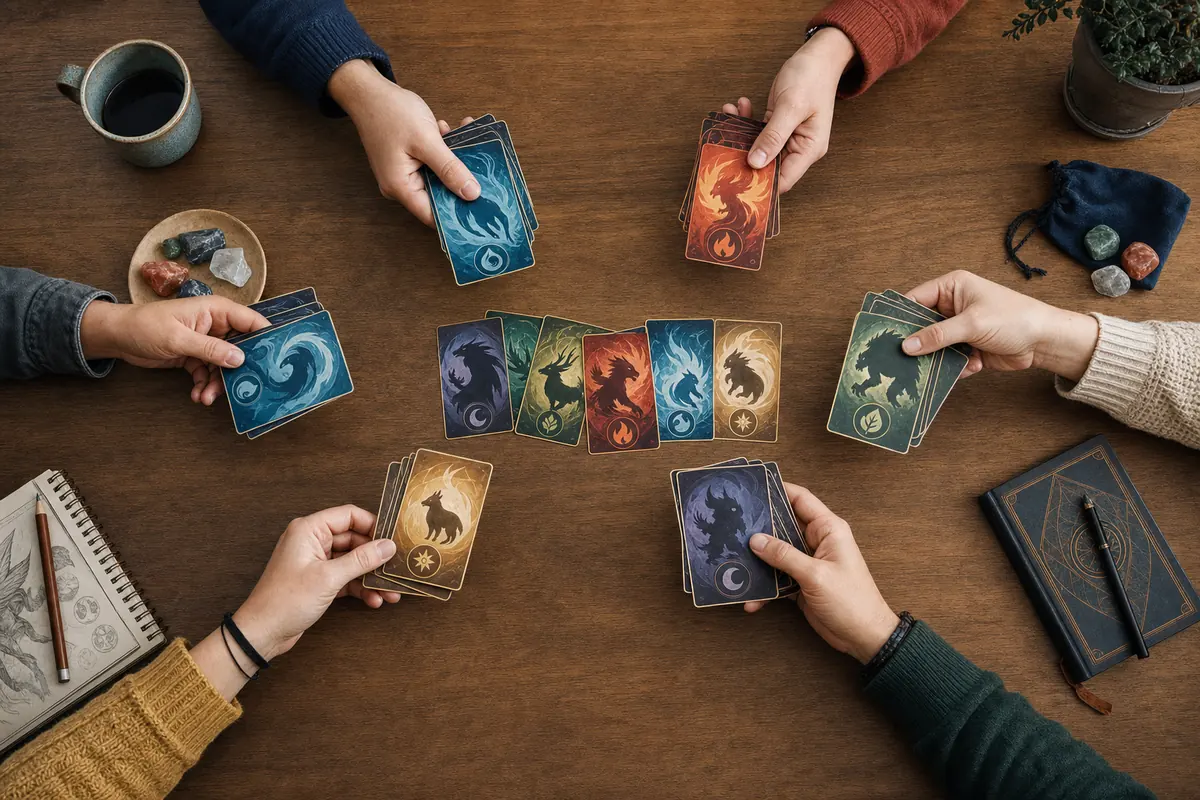
In a typical Booster Draft, players open one pack, choose one card, and pass the remaining cards to the next player until every card is selected. The passing direction alternates between packs. Players then build exactly 40 cards using drafted cards plus Basic Energy supplied by the organizer.
Limited games normally use four Prize cards rather than six. Official details can vary by product and organizer, so confirm the current event rules before play. For a casual night, write down the pack count, player count, pass direction, card-pool limits, and match structure before anyone opens a pack.
Core Pokemon TCG draft rules
Use this baseline for a clean Booster Draft, then adjust only the items your group agrees on in advance.
- Use one shared product plan. Give every player the same number and type of packs, or use equal portions of a balanced cube.
- Pick one card at a time. Keep the chosen card face down, then pass the rest only after every player has made a pick.
- Alternate the pass direction. Pass left for the first pack, right for the second, and left again for the third unless event rules say otherwise.
- Build exactly 40 cards. Use only drafted cards and the allowed Basic Energy pool.
- Set aside four Prize cards. The shorter deck and four-Prize setup keep Limited games moving.
- Resolve odd cards before play. Agree how to handle code cards, markers, promos, duplicates, and cards that need missing evolution lines.
Which Pokemon TCG draft format should you use?
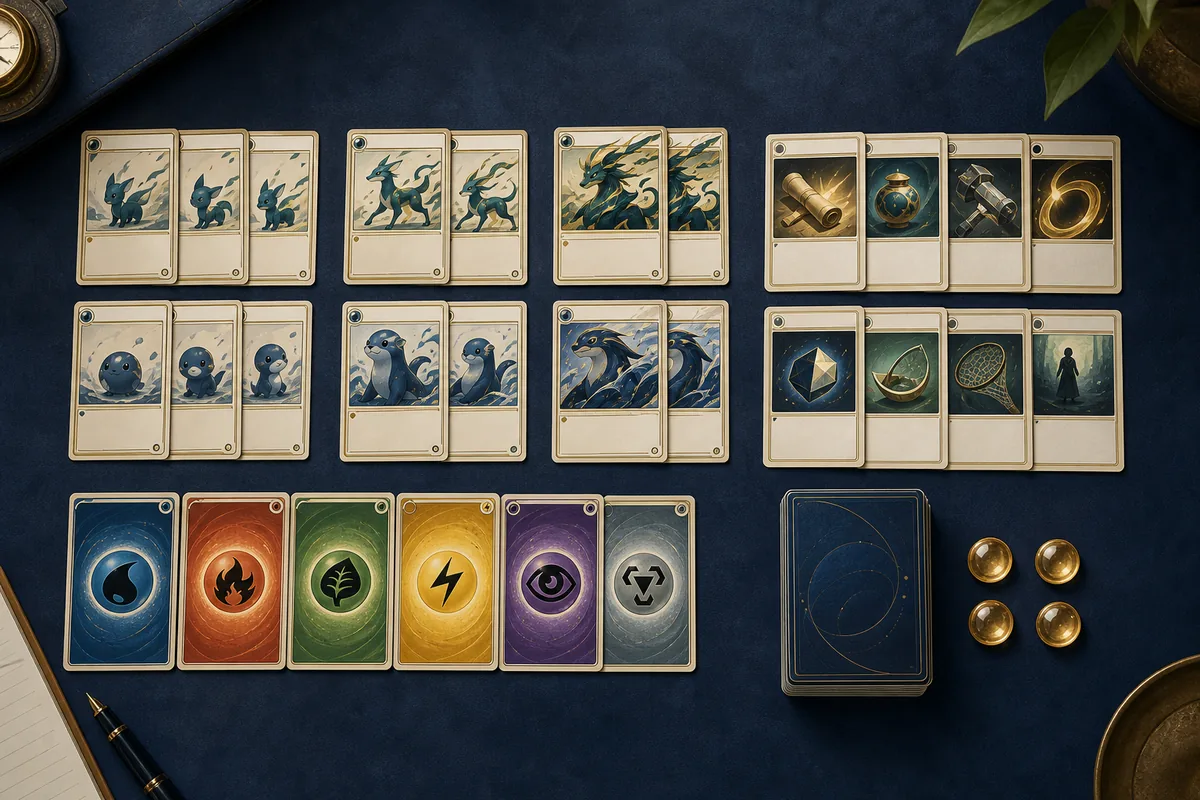
The word draft covers several related formats. Match the format to your product, group size, and setup time.
| Format | Card pool | Best for | Key difference |
|---|---|---|---|
| Sealed | Individual packs or Build & Battle product | New players and Prerelease-style play | No passing; build from your own pool |
| Booster Draft | Usually several packs per player | 4-8 players who enjoy reading signals | Pick one card and pass the rest |
| Build & Battle Draft | Build & Battle contents plus shared rules | Fast store or home events | Starts from a partial deck |
| Battle Box Draft | Curated reusable shared stack | Repeatable low-cost sessions | No fresh boosters required |
| 80-card / cube variant | Curated mini-cube | Two-player or small-group casual play | House rules define packs, duplicates, and Energy |
What is a Pokemon TCG draft?
Draft combines card evaluation, table signals, and deck construction. Each pick removes one option from a pack and sends the remaining choices to another player.
This intent is different from a Pokemon video-game team draft. Our Pokemon Randomizer Draft tool chooses creatures for a game challenge, while this page explains the physical trading-card Limited format.
- Official Limited play includes Sealed, Booster Draft, and Build & Battle-style structures.
- Casual Battle Box and cube drafts reuse a curated pool and need house rules.
- The goal is a playable 40-card deck, not the most valuable pile of cards.
Pokemon TCG Booster Draft process step by step
Seat players around one table and distribute equal packs. Everyone opens pack one, chooses one card, and places it face down. When every player is ready, pass the remaining cards in the agreed direction and repeat until the pack is empty.
Open the next pack and reverse the direction. Alternating directions reduces seat advantage and changes which types and evolution lines reach you. After the final pack, reveal only your own pool and move to deck building.
- Recommended group: four to eight players.
- Use a visible timer only if slow picks stall the table.
- Do not discuss hidden picks unless the draft is explicitly cooperative.
- Record the pack count and direction before opening product.
How to build a reliable 40-card draft deck
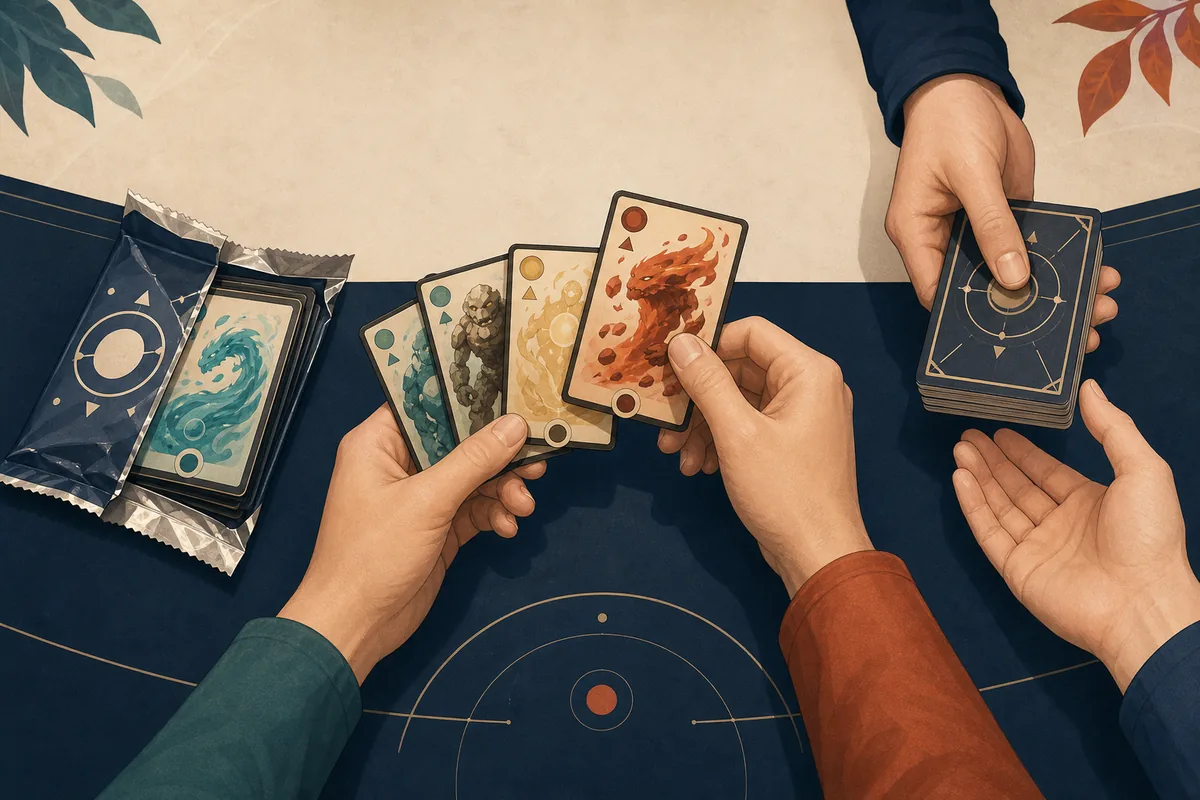
Start with a simple skeleton rather than forcing every rare card into the deck. Prioritize Basic Pokemon, short evolution lines, flexible Trainers, and enough Energy to attack on schedule.
A practical first pass is roughly 14-18 Pokemon, 8-12 Trainers, and 12-16 Energy, then adjust for search, draw support, retreat costs, and attack requirements. This is a planning range, not an official ratio.
- Favor two main Energy types; splash a third only for a strong low-cost effect.
- Count playable Basics before adding ambitious Stage 2 lines.
- Keep Trainer cards that draw, search, switch, or recover resources.
- Limited normally removes the constructed four-copy limit unless card text creates a restriction.
Draft pick strategy: power, consistency, and signals
Early picks should be strong on their own: efficient Basic Pokemon, flexible Trainers, or cards that work in several plans. Later picks can complete evolution lines and reveal which types are open.
Do not chase a first-pick card after the table dries up. A complete two-type deck usually performs better than powerful cards that cannot evolve or attack consistently.
- Power: can the card affect a game without missing pieces?
- Consistency: does it improve setup, draw, search, switching, or Energy access?
- Commitment: how many evolutions or Energy types does it require?
- Signal: are playable cards of the same plan arriving late?
Battle Box and 80-card draft variants
Battle Box and mini-cube formats reduce cost by reusing a curated pool. They are useful for two players or small groups, but there is no single universal ruleset. The host must define mini-pack size, duplicates, deck size, and Basic Energy access.
For an 80-card two-player pool, split cards into small face-down packs and alternate first pick. Two full 40-card decks may be impossible after unusable evolution pieces, so expand the pool or state a smaller deck size.
- Keep evolution families together when building the pool.
- Avoid narrow cards with no legal targets in the cube.
- Refresh overpowered or unplayable cards after each session.
- Label the variant as casual and separate it from current tournament policy.
Host checklist before the first pack opens
A five-minute rules briefing prevents most disputes. Put the rules where every player can see them and keep basic supplies ready.
- Player count, packs per player, and eligible sets
- Pass direction for every pack
- Pick timer and communication policy
- Deck size, Prize count, duplicate rules, and Basic Energy source
- Best-of-one or best-of-three matches and round time
- Treatment of promos, code cards, markers, and damaged cards
Pokemon TCG Draft FAQ
How many packs do you need for a Pokemon TCG draft?
It depends on the approved format. Give every player equal product and publish the exact pack count before opening.
How many cards are in a Pokemon TCG draft deck?
Limited decks are exactly 40 cards under the standard structure, with four Prize cards set aside.
Can I use more than four copies of one card in a draft deck?
Limited normally removes the constructed four-copy limit, except when a card's own text imposes a restriction.
What is a Pokemon TCG Battle Box draft?
It is a casual reusable draft from a curated shared card pool. The host defines pack size, pick order, duplicates, deck size, and Energy rules.
Can two people play an 80-card Pokemon TCG draft?
Yes as a casual variant, but 80 cards may not support two full 40-card decks. Use a larger pool or smaller decks when needed.
Is Pokemon TCG draft the same as a Pokemon team draft?
No. TCG draft uses physical cards and Limited deck rules; a team draft selects creatures for a video-game roster.
Rules and format references
Check the latest organizer documents before a sanctioned event. Practical ratios and casual variants on this page are editorial guidance, not tournament policy.
- Play! Pokemon event requirements - official current event and Prerelease requirements
- Pokemon TCG Build & Battle example - official example of 40-card play with four Prize cards
- Bulbapedia Limited format overview - community overview of Limited sub-formats and deck rules
Draft a video-game roster too
If your group meant a Pokemon video-game draft, generate a shared roster board and set reroll rules before picking.
Open Pokemon Randomizer Draft Read Gym Challenge Rules